
Taprefer Alternatives for Where Can SAAS Founders Submit Their Affiliate Program
Explore top Taprefer alternatives and SaaS affiliate directories to list your affiliate program, recruit top-performing creators, and grow recurring revenue.

Building a recurring commission affiliate program for a software product takes less than an hour with tools like FirstPromoter, Rewardful, or Stripe. Generating steady revenue from that program takes months of active distribution. Most SaaS founders launch their affiliate portal, add a link to their website footer, and wait for signups that never happen.
If nobody knows your affiliate program exists, your payout structure does not matter. To attract bloggers, media buyers, niche publishers, and content creators, you must put your offer where those promoters actively shop for products to monetize.
Directories like Taprefer popularized dedicated listing hubs for software partnerships, but relying on a single directory leaves your recruitment pipeline underfilled. To build a repeatable affiliate recruitment engine, you need a multi-channel submission strategy spanning curated SaaS directories, in-app software marketplaces, founder networks, and publisher-facing database platforms.
The 5 Channels for Submitting Your SaaS Affiliate Program
Not all listing platforms deliver the same quality of publisher traffic. A high-volume open directory might bring dozens of low-intent signups who spam social media links, while a curated SaaS marketplace brings handfuls of high-converting B2B bloggers.
Understanding where your prospective partners spend their time allows you to align your distribution channel with your target customer base.
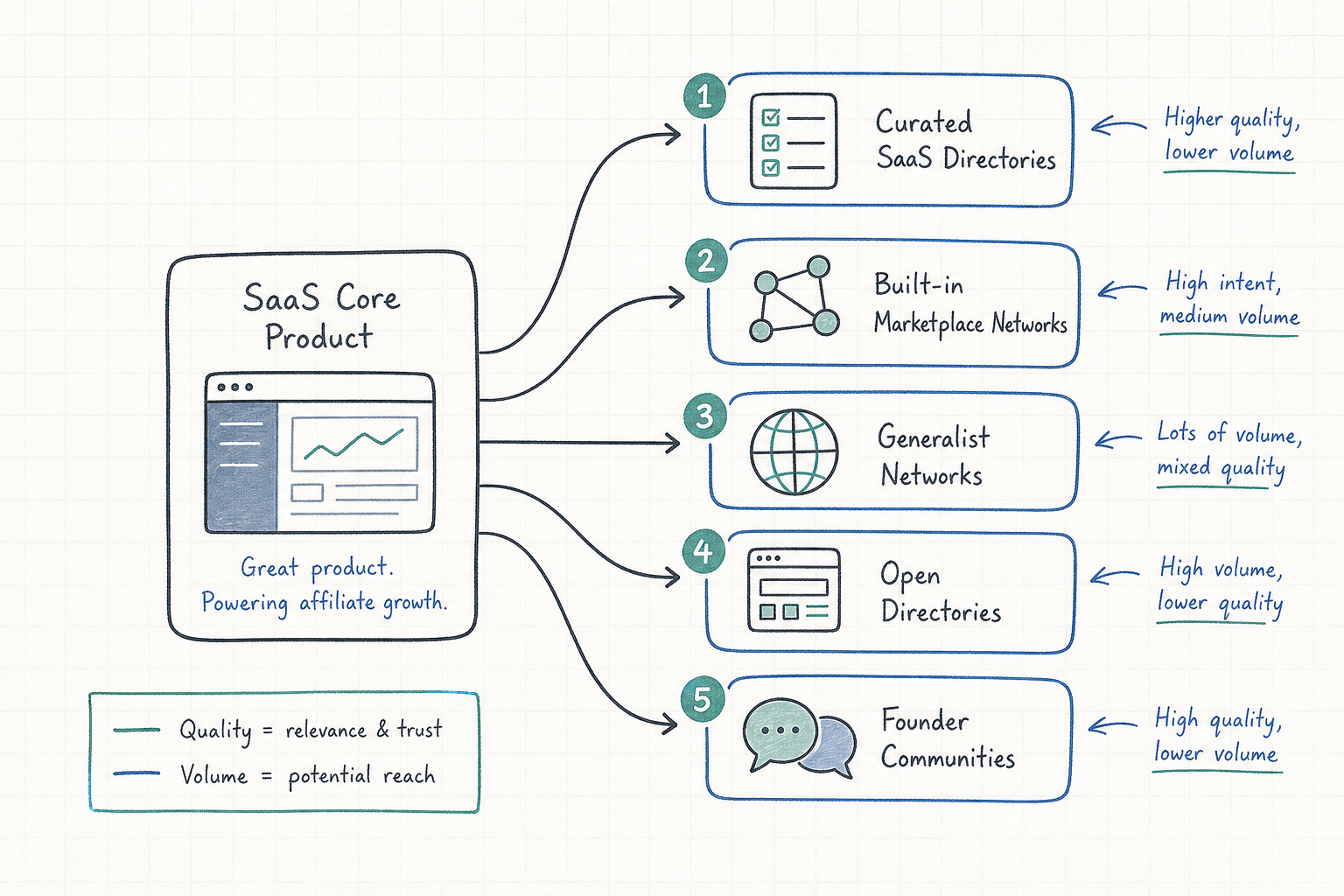
1. Curated SaaS Affiliate Directories
Curated directories organize affiliate opportunities by software category, commission model, cookie duration, and payout terms. Marketers use these hubs when they are looking for specific software tools to review or add to round-up articles. Platforms like AffiliList maintain curated databases of software offers, giving publishers clear visibility into commission terms without requiring them to fill out lengthy application forms first.
2. Built-in SaaS Marketplace Networks
If you run your tracking on platforms like PartnerStack or Reditus, your program gets listed inside an internal marketplace alongside other B2B tools. These platforms attract established B2B agencies, consultants, and media publications who prefer managing all their payouts inside a single platform interface.
3. Generalist Affiliate Networks
Traditional affiliate networks like ShareASale, CJ Affiliate, or Impact handle both tracking and partner discovery. While these networks host massive publisher bases, they often come with setup fees, monthly minimums, and strict compliance requirements that may not align with early-stage software companies.
4. Open Listing Directories
Open web directories accept instant program submissions from any merchant. They generate high immediate traffic volumes, but they require active filtering because they attract thousands of generalist affiliates who sign up without checking whether your SaaS fits their specific audience.
5. Community and Founder Ecosystems
Submitting your program to founder communities, Slack groups, and product showcase sites captures early adopters who already understand your product category. These platforms work best when you offer exclusive launch rates or founding partner incentives.
Top Dedicated Directories and Taprefer Alternatives
Directories remain the fastest entry point for listing a new software partnership opportunity. Content creators check these hubs daily to discover emerging software platforms within the best niches for affiliate marketing.
                 SaaS Program Submission Matrix
┌─────────────────┬───────────────────┬──────────────────┬─────────────────┐
│ Directory Type  │ Submission Cost   │ Partner Quality  │ Setup Velocity  │
├─────────────────┼───────────────────┼──────────────────┼─────────────────┤
│ Curated SaaS    │ Free / Paid Slot  │ High B2B Focus   │ Same Day        │
│ In-App Network  │ Platform Fee      │ Enterprise/Agencies│ 1 - 3 Days     │
│ Open Directories│ Free / Low Fee    │ Mixed Volume     │ Instant         │
│ Founder Forums  │ Free / Community  │ High Early SaaS  │ Manual Posts    │
└─────────────────┴───────────────────┴──────────────────┴─────────────────┘
1. AffiliList
AffiliList is a comprehensive directory designed specifically for software, digital tools, and B2B products. With a curated database hosting over 10,000 affiliate programs, the platform offers an open-access model where publishers can inspect payout structures, cookie windows, and tracking models without hitting a registration wall.
SaaS founders can submit their program directly through a dedicated submission portal. Because the directory categorizes programs using detailed niche tags—such as AI writing, HR platforms, YouTube tools, and developer utilities—your submission gets exposed to publishers actively looking to build niche sites. This targeted visibility helps attract partners who specialize in writing high-intent product reviews and comparison articles, where conversion rates are naturally higher.
2. Taprefer
Taprefer became a recognized standard for indie hackers and micro-SaaS builders looking to share their affiliate offers. It functions as an open directory where creators search for software tools based on commission rates and recurring payout models.
While Taprefer offers immediate visibility for new software releases, its open submission model means your listing competes alongside hundreds of unverified tools. Using Taprefer in combination with curated directories ensures you reach both impulse joiners and established digital publishers.
3. Affpaying and Affise Directory Listings
Affpaying operates as an open review directory where affiliate marketers rate and discuss affiliate programs, networks, and offers. While historically weighted toward performance networks, CPA offers, and direct-response marketing, it retains a large audience of full-time media buyers and traffic brokers.
If your SaaS tool runs a high single-payment referral incentive or aggressive trial conversion offer, listing on performance directories like Affpaying attracts partners who run paid search and social campaigns at scale.
4. SaaS Affiliate Hubs and Aggregators
Niche aggregators maintain hand-curated spreadsheets, Notion databases, and public directories dedicated exclusively to software affiliate programs. These lists are frequently maintained by newsletter creators, growth marketers, and niche site strategists who publish regular roundups to their subscribers.
Submitting your program details to these indie aggregators often leads to natural inclusions in weekly growth newsletters, giving your software direct exposure to experienced digital operators.
SaaS Marketplaces and Tracking Ecosystems
Choosing your tracking platform often determines which built-in partner networks you can access automatically. Many tracking providers double as discovery marketplaces, removing the need for manual recruitment outreach.
| Platform | Primary Target Audience | Integration Complexity | Marketplace Focus | Best For |
|---|---|---|---|---|
| PartnerStack | B2B Agencies & Mid-Market SaaS | Medium to High | Enterprise B2B & Agencies | Growth and scale-stage SaaS |
| Reditus | B2B SaaS Publishers & Bloggers | Low (Stripe / Webhook) | Pure B2B SaaS Directories | Seed to Series A software tools |
| Impact.com | Publishers, Creators & Media Brands | High (API / SDK) | Global Creator & Commerce | Consumer SaaS & Enterprise |
| Rewardful | Stripe-based Indie SaaS Tools | Low (No-code Stripe link) | Directory Ecosystem | Early-stage bootstrapped SaaS |
| FirstPromoter | Custom SaaS & Subscription Tools | Low to Medium | Partner Discovery Network | Recurring subscription apps |
PartnerStack Marketplace
PartnerStack serves as an enterprise-grade partner ecosystem built specifically for B2B software vendors. When you run your program on PartnerStack, your tool is displayed in a searchable marketplace accessible by thousands of vetted B2B agencies, software consultants, and vertical media outlets.
The platform manages partner payouts, tiered commissions, and automated co-marketing resources. It comes with enterprise software pricing, making it best suited for companies with high customer lifetime value and established sales pipelines.
Reditus Marketplace
Reditus is built specifically for B2B software products. It combines lightweight tracking software with an internal marketplace where B2B bloggers and site owners filter programs by monthly recurring revenue share, payout thresholds, and trial conversion rates.
Because Reditus focuses exclusively on B2B software, founders avoid competing for visibility against physical goods or broad consumer offers. Their built-in directory allows you to list your program directly from your dashboard once your integration with Stripe or Chargebee goes live.
Impact.com Partner Marketplace
Impact.com handles large-scale affiliate, influencer, and content partnerships. It caters to established software platforms targeting broad consumer audiences or major publishing houses like Wirecutter and Future PLC.
Submitting your brand to the Impact marketplace gives your team direct access to application workflows with major online publishers. The onboarding process requires dedicated technical integration and account management resources.
Rewardful and FirstPromoter Partner Ecosystems
Rewardful and FirstPromoter power the backend for thousands of bootstrapped and VC-backed SaaS products built on Stripe. While both tools primarily operate as tracking software, they both maintain native publisher directories and offer cross-promotional placement for merchant accounts.
By optimizing your public vendor profile within these platforms, you allow registered affiliates on those networks to join your program with a single click, eliminating application friction.
Community Submissions for Early-Stage Software
When you are launching a new product without a massive brand presence, traditional directories should be paired with active community engagement. Reaching out to software founders and builders helps you land your initial cohort of active partners.
                      Community Submission Pipeline
┌──────────────────┐     ┌──────────────────┐     ┌──────────────────┐
│ Indie Hackers    │────>│ Product Hunt     │────>│ Reddit & Slack   │
│ Post Program     │     │ Announce Launch  │     │ Share Value &    │
│ Mechanics        │     │ & Partner Perks  │     │ Direct Invites   │
└──────────────────┘     └──────────────────┘     └──────────────────┘
Indie Hackers
Indie Hackers is an active community of software creators, solo founders, and digital marketers. Publishing a transparent write-up about your affiliate launch can attract your first group of promoters.
Share the specific mechanics behind your program:
- Why you selected your recurring commission percentage
- Your average customer lifetime value and churn rates
- How you plan to support your top-performing partners
- The exact conversion rates of your sales funnel
Community members value operational transparency. When founders share real data about their trial-to-paid conversions, established marketers take notice and sign up to promote the product.
Product Hunt Launch Announcements
During a Product Hunt launch, founders focus primarily on user acquisition. Incorporating an affiliate program announcement into your launch day updates gives immediate incentive for supporters to promote your product across their own channels.
Include a direct link to your program listing in your maker comment. Offering an elevated commission rate for partners who join during launch week creates urgency and encourages immediate coverage from tech bloggers.
Reddit Communities (r/SaaS, r/MicroSaaS, r/AffiliateMarketing)
Submitting your program details on Reddit requires a careful, value-first approach. Outright promotion without context often leads to post removal or account bans.
Instead of posting a raw referral link, start a discussion around your recruitment strategy:
- Share lessons learned while setting up your tracking infrastructure
- Discuss commission structure choices between recurring MRR splits and flat one-time payouts
- Invite feedback on your affiliate landing page design
- Include your directory listing link when users ask where to view the program details
Publishing practical details about your unit economics demonstrates to readers that affiliate marketing is legitimate and operated professionally, encouraging higher-quality applications.
How to Structure Your Submission to Convert Publishers
Submitting your program to a directory is only the first step. If your program profile lacks essential details, experienced publishers will skip over your software and choose a competitor with clearer terms.
Content creators view program listings as business propositions. They calculate the expected return on their web traffic before spending hours writing reviews, creating video tutorials, or setting up email sequences.
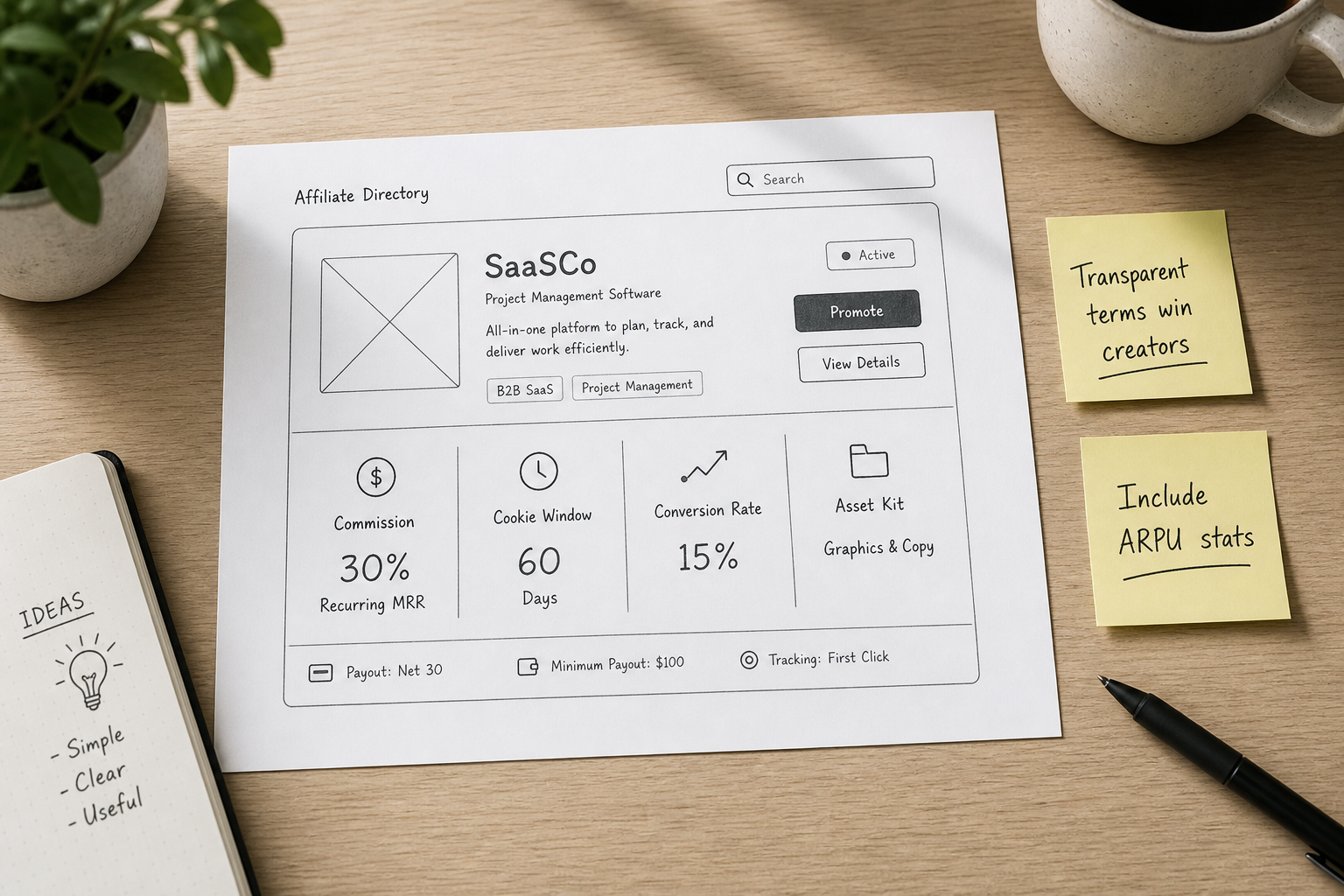
Essential Submission Metadata Checklist
To maximize your application rate across directories, ensure your submission contains these core data points:
1. Commission Structure and Payout Terms
Be explicit about whether you offer recurring monthly payouts or a single flat referral fee. High-performing creators prefer recurring models, such as 20% to 30% lifetime MRR share, because it builds predictable revenue. If you offer a one-time fee, ensure it reflects a fair percentage of your initial customer acquisition value.
2. Cookie Duration
Specify your tracking cookie window clearly. Standard software programs offer 30 to 90 days. Short tracking windows discourage content creators who rely on organic search, where prospective software buyers often take weeks to evaluate tools before purchasing.
3. Average Revenue Per User (ARPU) and Conversion Rates
Including benchmark conversion metrics shows affiliates what their traffic is actually worth. If your free-trial-to-paid conversion rate is 15% and your average plan costs $80 per month, publish those figures in your directory profile.
4. Payment Methods and Thresholds
State how and when affiliates get paid. Mention whether you issue payouts via PayPal, Wise, or direct bank transfer, and clarify your minimum payout threshold along with your refund clearing window.
5. Marketing Materials and Asset Support
High-converting listings highlight available marketing collateral, such as logo packs, product interface screenshots, email swipe copy, custom feature graphics, and pre-built landing pages.
                  Affiliate Offer Conversion Structure
┌──────────────────────────────────────────────────────────────────────┐
│  High-Converting SaaS Listing Profile                                │
├──────────────────────────────────────────────────────────────────────┤
│  [+] Product Category: B2B Email Automation                          │
│  [+] Commission: 30% Recurring Lifetime MRR                          │
│  [+] Cookie Window: 60 Days (First Touch)                            │
│  [+] Average Monthly Plan Value: $49 / month                         │
│  [+] Trial-to-Paid Benchmark: 18%                                    │
│  [+] Payout Rails: Stripe Connect, Wise, PayPal ($50 min)            │
│  [+] Assets Provided: Figma design kit, demo video embeds, swipe copy│
└──────────────────────────────────────────────────────────────────────┘
Step-by-Step Distribution Checklist for SaaS Founders
To maximize partner recruitment, follow this step-by-step submission checklist when launching your program.
                    5-Step Program Distribution Framework
┌─────────────────────────┐
│ Phase 1: Metadata Prep  │ ──> Draft terms, cookie windows, asset kits
└─────────────────────────┘
             │
             ▼
┌─────────────────────────┐
│ Phase 2: Hub Submissions│ ──> Submit to AffiliList, Taprefer, Reditus
└─────────────────────────┘
             │
             ▼
┌─────────────────────────┐
│ Phase 3: Network Sync   │ ──> Enable internal marketplace integrations
└─────────────────────────┘
             │
             ▼
┌─────────────────────────┐
│ Phase 4: Community Launch│──> Share build logs on Indie Hackers & Reddit
└─────────────────────────┘
             │
             ▼
┌─────────────────────────┐
│ Phase 5: Cold Outreach  │ ──> Reach out to authors of existing roundup posts
└─────────────────────────┘
Phase 1: Prepare Your Program Listing Metadata
Assemble all required program details in a central document before filling out directory forms. Having clear descriptions, high-resolution logos, and approved terms ready ensures consistent branding across every directory.
Phase 2: Submit to Core Curated SaaS Directories
Start by submitting your profile to specialized directories like AffiliList and Taprefer. These platforms process applications quickly, putting your program in front of active publishers who regularly search for new software tools to monetize.
Phase 3: Enable In-App Marketplace Features
If you use tracking tools like Reditus, PartnerStack, or FirstPromoter, activate your public directory listing directly inside your account dashboard. Ensure your product category tags match your core customer use case.
Phase 4: Announce in Founder Communities
Publish detailed, value-focused launch notes on Indie Hackers, Reddit, and founder Slack groups. Focus on why you selected your commission structure and how your team supports external growth partners.
Phase 5: Pitch Targeted Content Creators
Search for existing product roundups, software comparison guides, and category review articles in your niche. Contact the site owners directly, pointing them to your verified directory profile so they can inspect your terms and join your program seamlessly.
Tactical Case Study: Recruited 45 Active Affiliates in 30 Days
To illustrate how structured directory submissions work in practice, consider how an early-stage B2B SaaS startup successfully recruited its initial partner cohort.
The Challenge
A boot-strapped team built a document automation platform priced at $40 per month. After integrating FirstPromoter and adding a link to their footer, they gained only two active affiliates over three months, generating less than $100 in referral sales.
The Submission Strategy
Instead of relying solely on site visitors, the founder executed a coordinated submission campaign over two weeks:
- Profile Optimization: The team updated their offer from a standard 10% lifetime fee to a 30% recurring payout with a 60-day cookie window. They built a dedicated partner dashboard complete with Figma brand kits, email templates, and short video product demos.
- Directory Submissions: The founder submitted the updated program to AffiliList, Taprefer, and Reditus. They selected tags focused on document automation, productivity, and office management tools.
- Targeted Community Engagement: The founder published a post on Indie Hackers detailing their sales funnel metrics, conversion rates, and profit margins, inviting community feedback on their partner terms.
- Outreach to Niche Bloggers: The team identified creators running an affiliate marketing blog that published software guides. Instead of sending generic sales pitches, they pointed site owners directly to their open directory listing, allowing bloggers to verify the payout terms independently.
                     30-Day Campaign Performance
┌─────────────────────────────┬──────────────────────────────┐
│ Metric                      │ Result                       │
├─────────────────────────────┼──────────────────────────────┤
│ Total Applications Received │ 112                          │
│ Approved Partners           │ 45                           │
│ Published Review Articles   │ 14                           │
│ New Referral Customers      │ 88                           │
│ Added Monthly Recurring Rev │ $3,520                       │
└─────────────────────────────┴──────────────────────────────┘
The Results
Within 30 days, the program received 112 partner applications. The team approved 45 qualified publishers who operated active blogs, YouTube channels, or newsletter lists.
Fourteen creators published dedicated review articles and comparison guides within the first six weeks. This initial activity added $3,520 in new monthly recurring revenue, turning the affiliate channel into the company's fastest-growing acquisition source.
Common Mistakes Founders Make When Submitting Programs
Listing your software on directories can accelerate partner recruitment, but common setup errors can prevent qualified affiliates from applying.
1. Hiding Terms Behind Mandatory Registration
Requiring publishers to create an account just to view basic terms like commission rates or cookie duration creates unnecessary friction. Affiliates want to evaluate potential returns before committing to an application process. Open directories like AffiliList solve this by displaying key program terms upfront.
2. Offering Uncompetitive Commission Rates
Offering a 5% or 10% one-time commission on a $15 monthly subscription is rarely enough to attract experienced marketers. Promoting software requires investment in content creation, search engine optimization, or paid advertising. To secure coverage in competitive sectors, offer recurring payouts that reflect your actual customer lifetime value.
3. Ignoring Partner Onboarding and Activation
Recruiting an affiliate is only half the battle; getting them to create content is what drives revenue. Many founders approve applications but fail to send follow-up onboarding guides, product updates, or conversion tips. Automated onboarding emails help turn pending applicants into active promoters.
4. Setting Low-Quality Program Descriptions
Submitting generic one-sentence product descriptions makes your listing easy to overlook. Treat your directory submission like a landing page by highlighting unique features, ideal customer profiles, key integrations, and baseline conversion metrics.
               Listing Profile Optimization Strategy
┌───────────────────────────────────┬───────────────────────────────────┐
│ Common Submission Error           │ Recommended Fix                   │
├───────────────────────────────────┼───────────────────────────────────┤
│ Gated Payout Terms                │ Display commission & cookies      │
│ Low Flat Fees (5-10%)             │ Offer 20-30% Recurring MRR        │
│ Generic Product Descriptions      │ Add ICP data, conversion stats    │
│ Zero Promotional Assets           │ Supply Figma graphics & copy kits │
│ Manual Approval Delays            │ Process applications in 24-48 hrs │
└───────────────────────────────────┴───────────────────────────────────┘
Manual Outreach Strategy: Leveraging Directory Proof
Submitting your program to online directories does more than drive passive applications; it also strengthens your cold outreach campaigns.
                    Cold Outreach Conversion Funnel
┌───────────────────────────┐
│ Identify Niche Publishers │ ──> Search for keyword roundups in Google
└───────────────────────────┘
              │
              ▼
┌───────────────────────────┐
│ Send Value-Driven Pitch   │ ──> Highlight product match & directory proof
└───────────────────────────┘
              │
              ▼
┌───────────────────────────┐
│ Provide Verified Listing  │ ──> Link to AffiliList profile for open terms
└───────────────────────────┘
              │
              ▼
┌───────────────────────────┐
│ Send Niche Content Kit    │ ──> Supply graphics, review accounts & copy
└───────────────────────────┘
When contacting site owners who feature competing software in their roundups, point them directly to your verified directory profile. Showing prospective partners that your program is listed on trusted platforms like AffiliList reassures them that your commission structure, cookie terms, and payout schedules are public and verified.
For example, when contacting a blogger who covers software options across profitable affiliate marketing niches, you can share a tailored message:
"We noticed your detailed comparison guide on project management software. We recently listed our software program on AffiliList with a 30% recurring MRR share and a 60-day cookie window. You can view our verified program terms and asset kit on our listing page here, and we would be glad to set up a full test account for your review team."
This transparent approach speeds up partner evaluations by providing all essential program details in an easy-to-verify format.
Frequently Asked Questions
What is the best place for a SaaS founder to submit an affiliate program for free?
Open curated directories like AffiliList, Taprefer, and Reditus allow software founders to submit their programs without high upfront listing fees. Publishing detailed announcements on Indie Hackers and specialized subreddits also generates initial visibility at zero cost.
How long does it take to get active affiliates after submitting to directories?
Most founders receive their initial applications within 24 to 72 hours of listing on active directories. Converting those applicants into active promoters typically takes two to four weeks as creators draft reviews, produce video tutorials, and publish content.
Should SaaS founders list on traditional networks like ShareASale or CJ Affiliate?
Traditional networks work well for consumer software products, high-volume retail apps, or established enterprises. Early-stage B2B SaaS platforms often achieve better returns by starting with specialized directories like AffiliList or native tracking marketplaces like Reditus, which cater specifically to software-focused publishers.
What commission structure attracts high-performing B2B SaaS affiliates?
Top-performing software affiliates look for recurring payouts between 20% and 40% for the lifetime of the customer, alongside a cookie window of 60 to 90 days. High-ticket software tools offering lump-sum payouts of $500 or more per customer acquisition are also popular among performance marketers seeking high paying affiliate programs.
What is the difference between an open directory and a curated database?
Open directories accept instant submissions without manual review, resulting in higher submission volume but variable listing quality. Curated databases maintain strict submission criteria, verifying product details and commission structures so publishers can browse high-converting offers with confidence.
Building a Repeatable Submission Workflow
Submitting your SaaS affiliate program across multiple directories converts a passive web portal into an active recruitment channel. Rather than relying on a single platform, spread your reach across curated databases like AffiliList, open listing sites, specialized tracking marketplaces, and founder communities.
By presenting transparent terms, competitive recurring commissions, and comprehensive marketing assets, you give content creators everything they need to start promoting your software product. Prepare your program details, submit to curated directories, and turn partner recruitment into a scalable acquisition channel.