Best Vetted Affiliate Programs List for Digital Marketers Tools Beyond Shareasale
Discover the best vetted affiliate programs for digital marketers. Explore high-ticket SaaS, recurring creator tools, and modern networks beyond ShareASale.
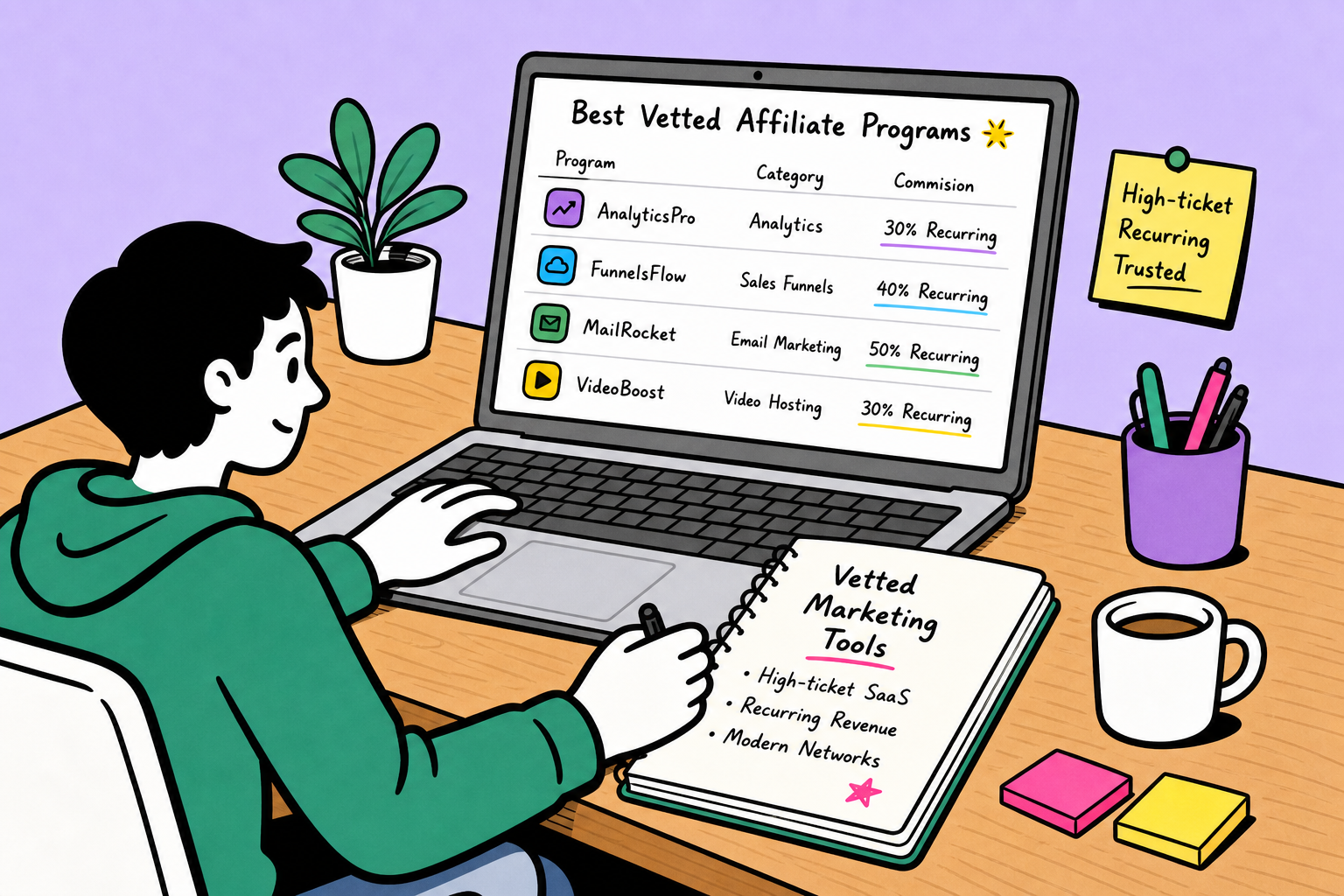
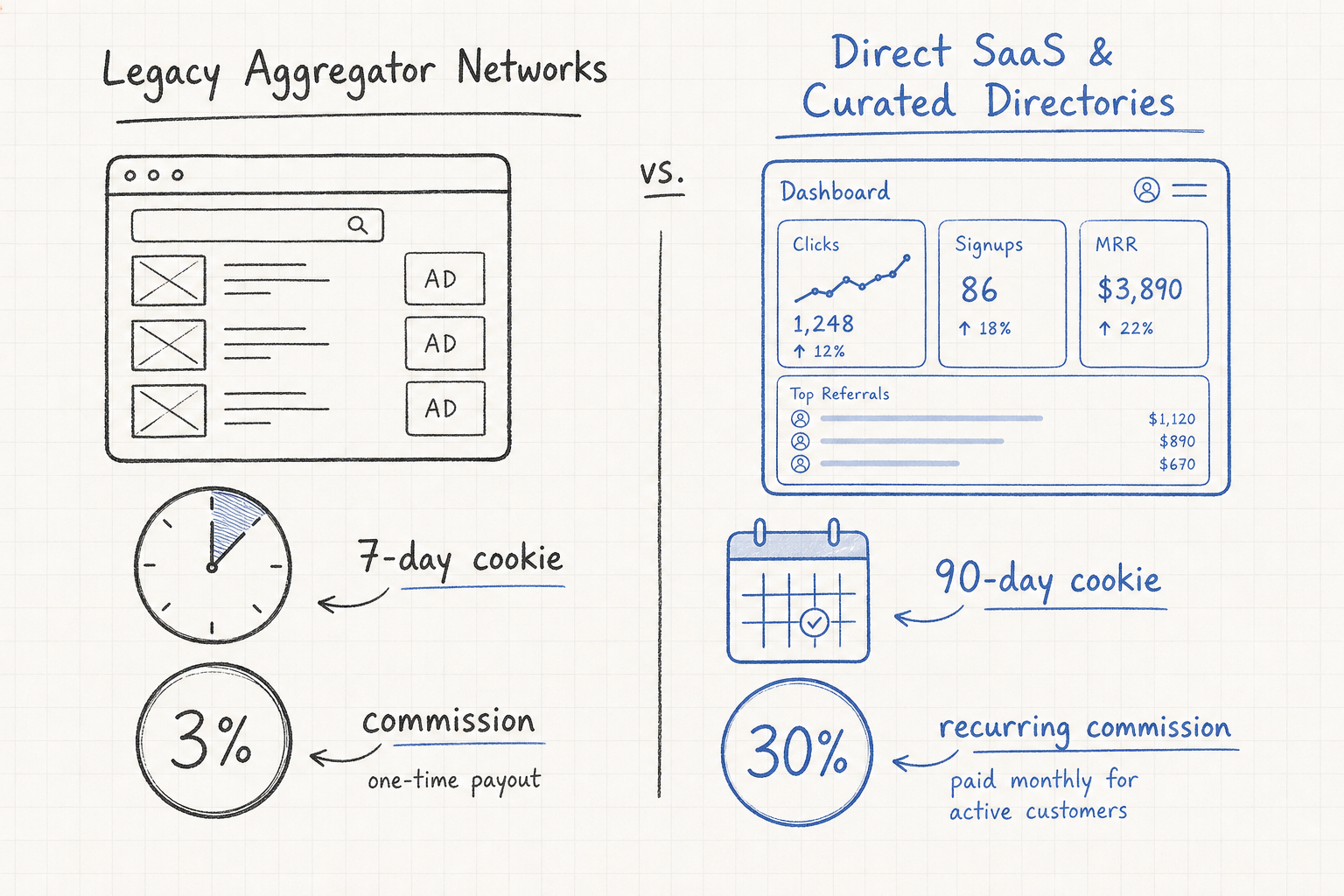
Most digital marketers start their affiliate journey the exact same way: you sign up for ShareASale, log into an interface that feels permanently stuck in 2012, and spend hours sifting through thousands of merchants just to find a handful of broken links, 3% commission rates, and tracking cookies that expire in seven days.
It is a frustrating rite of passage. While legacy networks still hold value, relying solely on them means you are missing out on independent SaaS programs, direct brand partnerships, and modern performance networks that offer substantially higher payouts and superior tracking.
For marketers targeting B2B audiences, content creators, and agencies, promoting high-quality digital tools and software is one of the most reliable paths to sustainable income. Unlike physical products—which suffer from razor-thin margins and shipping logistics—digital products often offer 30% to 50% recurring commissions or massive flat-rate bounties.
This guide breaks down a highly vetted affiliate programs list for digital marketers, categorizing the top opportunities by software type. We will look past the clutter to focus on offers that actually convert, tracking mechanisms you can trust, and strategies to align these tools with your audience's intent.
Why Marketers Need to Look Beyond Legacy Networks
The affiliate marketing landscape has shifted dramatically. A decade ago, joining a massive aggregator network was the only way to find merchants. Today, many premium SaaS companies host their own programs or utilize specialized B2B platforms.
Relying exclusively on legacy networks presents a few distinct disadvantages for modern marketers:
- Opaque Approval Processes: Many legacy programs auto-reject new sites without human review, making it difficult for emerging profitable affiliate marketing niches to gain traction.
- Hidden Program Terms: You often have to sign up, wait for approval, and dig through multiple pages just to find out a merchant uses a 7-day cookie or doesn't pay out on annual renewals.
- Leaky Funnels: Older platforms sometimes struggle with cross-device tracking. If a user clicks your link on their phone while commuting but completes the software purchase on their desktop at work three days later, you might lose the commission entirely.
This is exactly why AffiliList was built. As a comprehensive directory of over 10,000 affiliate programs, AffiliList allows you to bypass outdated lists and opaque networks. You can instantly view commission structures, payout terms, and cookie durations for SaaS and digital tools without having to register for a dozen different dashboards first.
High-Ticket and Evergreen Affiliate Programs
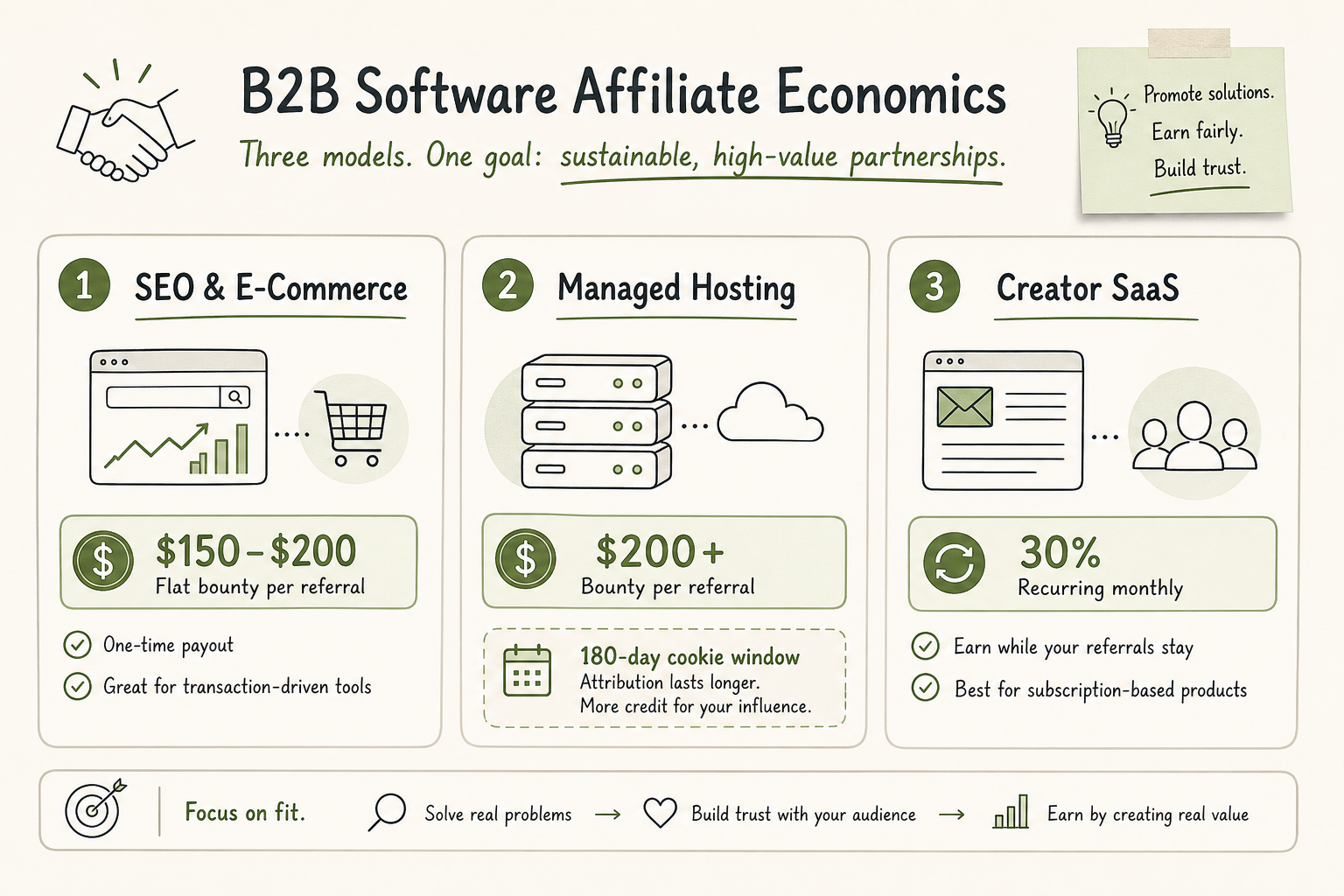
High-ticket programs provide substantial flat-rate commissions for single conversions. These are ideal if you have a lower-volume but highly targeted audience, such as agency owners or enterprise decision-makers. If you are building an affiliate marketing side hustle, landing just two or three of these sales a month can dramatically shift your revenue baseline.
SEMrush
SEMrush is arguably one of the most recognizable SEO and digital marketing platforms in the world. Because their software commands a premium price tag, their affiliate program is structured to heavily reward marketers who can drive qualified leads.
- Commission: Up to $200 per new subscription sale, $10 for every new trial activation, and $0.01 for new sign-ups.
- Cookie Duration: 120 days.
- Why it works: The 120-day cookie is incredibly generous for the SaaS industry. B2B software purchasing decisions often involve multiple stakeholders and can take weeks. This long attribution window ensures you get paid even if the user takes three months to finalize their budget.
- How to promote: In-depth SEO audit tutorials, competitor analysis breakdowns, and case studies showing how specific SEMrush features increased organic traffic.
Shopify
As the undisputed leader in e-commerce platform solutions, Shopify offers an affiliate program that caters well to audiences interested in entrepreneurship, dropshipping, and retail transition.
- Commission: Up to $150 for full-priced plan referrals.
- Cookie Duration: 30 days.
- Why it works: Brand recognition is your strongest asset here. You rarely have to convince a user that Shopify is a good platform; you only have to convince them that now is the time to start their store.
- How to promote: "How to start a brand" guides, e-commerce migration checklists, and comparisons between Shopify and marketplace platforms.
BigCommerce
Targeting a slightly higher-tier e-commerce market than Shopify’s baseline plans, BigCommerce is tailored for scaling businesses and enterprise clients. According to research on the best affiliate networks, their program is highly lucrative for B2B marketers.
- Commission: 200% of the customer's first monthly payment, or up to $1,500 for enterprise clients.
- Cookie Duration: 90 days.
- Why it works: The bounty structure is massive. Earning 200% of a first-month payment means even their mid-tier plans result in highly profitable conversions for the affiliate.
- How to promote: Technical comparisons (e.g., handling complex SKUs, headless commerce capabilities) and targeting established store owners looking to migrate away from rigid legacy systems.
If you are specifically hunting for large payouts, exploring 11 high paying affiliate programs for $500+ commissions can provide additional targets for your content calendar.
Web Hosting and Site-Building Infrastructure
Web hosting remains one of the most profitable sectors in affiliate marketing. Hosting companies have incredibly high customer lifetime values (LTV); once a user builds a site on a specific host, they rarely go through the hassle of migrating. Because of this high LTV, hosts can afford to pay affiliates heavily to acquire new users.
WP Engine
WP Engine provides premium managed WordPress hosting. This isn't for a hobbyist starting a personal blog; this is for businesses, agencies, and high-traffic publishers who need speed, security, and dedicated support.
- Commission: $200 minimum per signup, or 100% of the first month's payment (whichever is higher).
- Cookie Duration: 180 days.
- Why it works: The payout is exceptional, and the 180-day cookie ensures you capture long-term decision-makers. They also offer sub-affiliate incentives.
- How to promote: Site speed optimization guides, security checklists for WordPress, and content aimed at digital agencies looking for scalable hosting partners.
SiteGround
SiteGround is a staple in the digital marketing community, frequently recommended in guides on how to start a profitable affiliate marketing blog due to its balance of performance and beginner-friendly pricing.
- Commission: Performance-based tiered structure (typically starting around $50 per sale and scaling up to $100+ for high volume).
- Cookie Duration: 60 days.
- Why it works: SiteGround frequently runs aggressive front-end discounts, making it highly converting for beginner audiences who are price-sensitive but want reliable performance.
- How to promote: Step-by-step "start a blog" tutorials, WordPress installation videos, and hosting provider comparisons.
Creator Tools, Educational Platforms, and Design
The creator economy has exploded, bringing a wave of software designed for email marketing, course creation, and visual design. These programs often feature recurring revenue models, which is the holy grail of affiliate marketing.
ConvertKit
ConvertKit was built specifically for creators—writers, podcasters, and course instructors. Their messaging is highly focused, making it easy to sell to a specific demographic.
- Commission: 30% recurring commission for up to 24 months.
- Cookie Duration: 30 days.
- Why it works: Email marketing software has very low churn once a creator sets up their automated sequences. A 30% recurring commission means your income compounds month over month as you refer more users.
- How to promote: List-building challenges, newsletter monetization guides, and migration tutorials for users frustrated by overly complex enterprise tools.
Teachable and Thinkific
Online course platforms have seen massive adoption. Teachable and Thinkific are two of the biggest players, both offering strong affiliate incentives.
- Commission: Typically up to 30% recurring commission.
- Cookie Duration: 90 days.
- Why it works: Creators moving to a paid tier on these platforms are usually generating revenue themselves, which minimizes cancellation rates.
- How to promote: "How to launch your first online course" blueprints, knowledge monetization strategies, and comparisons of course hosting versus self-hosting.
Canva
Canva has revolutionized graphic design for non-designers. Its massive mainstream appeal makes it one of the easiest tools to promote, even if your audience isn't highly technical.
- Commission: Up to 80% of the first month on Pro monthly subscriptions, or 25% on annual subscriptions.
- Cookie Duration: 30 days.
- Why it works: The barrier to entry is zero. Users can try it for free, get hooked on the interface, and easily justify the Pro upgrade for premium assets and brand kits.
- How to promote: Social media templates, branding tutorials, and leveraging platforms like Pinterest. In fact, visual tools pair perfectly with visual search engines; learning step-by-step affiliate marketing on Pinterest is highly effective for Canva promotions.
Privacy, Security, and Specialized Tech
Digital marketers and remote workers require robust security tools, making Virtual Private Networks (VPNs) an excellent supplementary category for your affiliate portfolio.
NordVPN and PureVPN
The VPN market is characterized by aggressive marketing, heavy front-end discounting, and massive affiliate payouts.
- Commission: Often 40% to 100% on new sign-ups, with smaller recurring percentages for renewals.
- Cookie Duration: 30 to 90 days, depending on the network.
- Why it works: VPNs appeal to both B2B professionals securing their remote workflows and general consumers wanting geographic content unlocking. The conversion rates are historically very high.
- How to promote: Travel gear guides for remote workers, digital security audits, and software-stack roundups.
The Best Alternative Affiliate Networks
If you want to move beyond ShareASale but prefer centralizing your offers rather than managing fifty different direct SaaS logins, several modern networks have emerged as the gold standard for digital marketers. Knowing how to navigate these is often a core competency for those seeking affiliate marketing jobs in the corporate sector.
Impact (Formerly Impact Radius)
Impact has rapidly become the preferred platform for modern SaaS and direct-to-consumer brands.
- The Advantage: Their interface is incredibly intuitive. They offer electronic contract negotiations, highly transparent tracking terms, and excellent cross-device attribution. Brands like Canva, AppSumo, and HostGator have utilized Impact.
Awin and Rakuten LinkShare
While slightly older, both Awin and Rakuten handle major enterprise brands that you won't find anywhere else.
- The Advantage: If your digital marketing audience overlaps with global finance, hardware, or enterprise software, these networks hold exclusive contracts with top-tier international brands. Their vetting process is stricter, which keeps the ecosystems professional.
ClickBank and MaxBounty
For marketers leaning heavily into performance marketing, paid ads, or CPA (Cost Per Action) models, these networks remain relevant.
- The Advantage: They specialize in digital products, courses, and high-conversion landing pages. They are highly favorable for marketers running media buying campaigns who need instant data post-backs and high front-end margins.
Choosing the right network is critical to your strategy. As noted in multiple expert guides on affiliate selection, matching your platform to your traffic source prevents wasted clicks.
How to Vet an Affiliate Program Before Promoting It
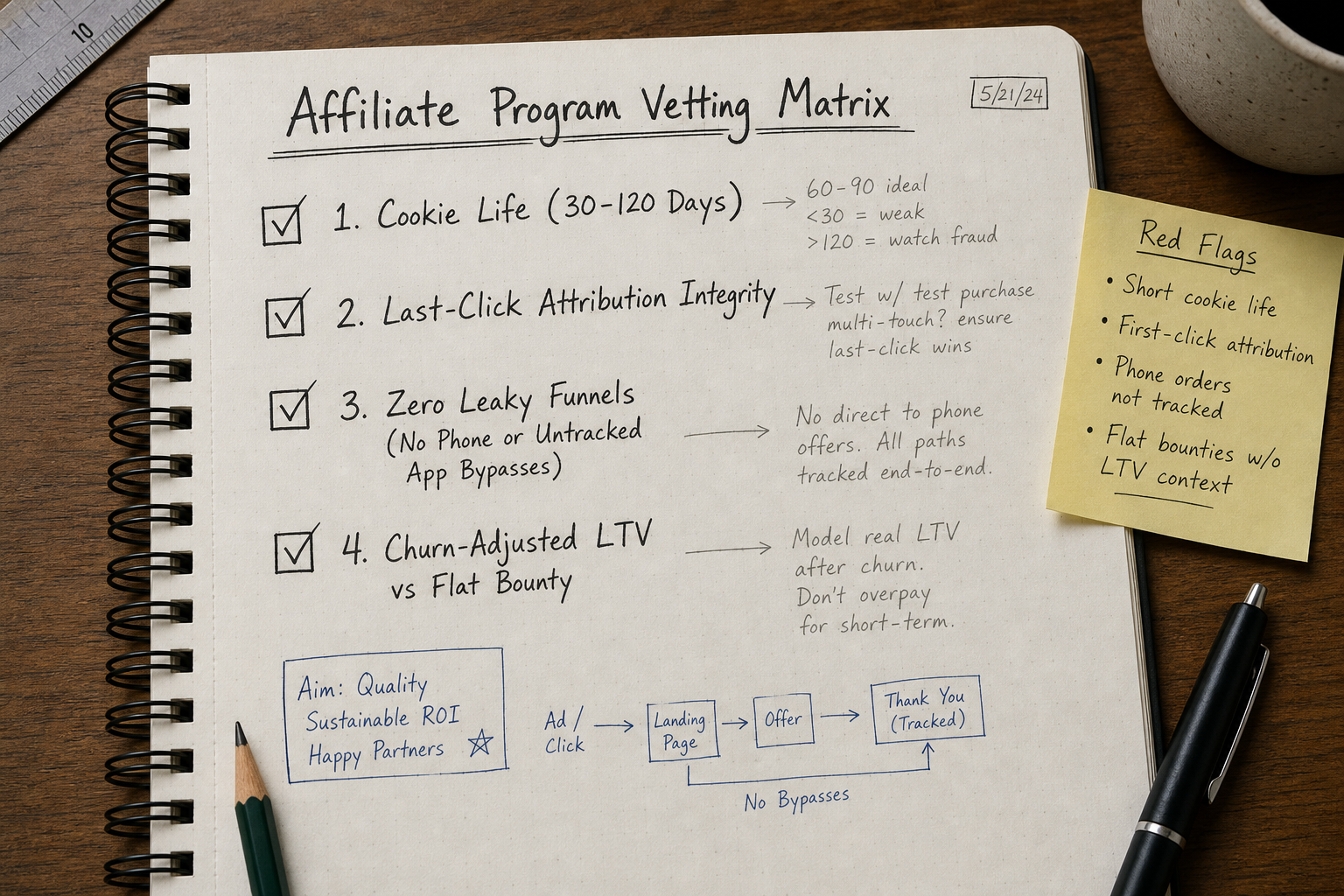
Finding a high commission rate is only the first step. Promoting a faulty product or a program with predatory affiliate terms can destroy your audience's trust and your revenue. Here is a practitioner's checklist for vetting any new opportunity you find on AffiliList or external networks.
1. Analyze the Cookie Duration
The cookie duration dictates how long after a click you can earn a commission. If a B2B software costs $2,000 a year, no one buys it on the first click. They click, read your review, talk to their boss, sign up for a demo, and buy three weeks later.
If the program has a 7-day cookie, you lose the commission. For high-ticket B2B software, refuse anything under 30 days. Aim for 60 to 90 days.
2. Check the Attribution Model
Does the program use "First Click" or "Last Click" attribution?
- First Click: Rewards the affiliate who introduced the customer to the brand.
- Last Click: Rewards the affiliate whose link was clicked immediately prior to the purchase.
Last click is the industry standard. However, watch out for programs where the brand actively bids on their own coupon terms in Google Ads. If a user reads your review, goes to checkout, sees a "promo code" box, Googles "[Brand] promo code," and clicks the brand's own ad, you lose the last-click attribution.
3. Identify Leaky Funnels
A leaky funnel happens when a merchant provides multiple ways for a user to convert that bypass affiliate tracking.
- Do they have a prominent "Call our sales team" number on the landing page? If the user calls, do you get credit? (Usually, no).
- Do they aggressively push an un-trackable mobile app download?
- Do they offer pop-up discounts that strip out affiliate referral tags?
Always click your own affiliate link, navigate the merchant's site, and see how hard they make it for your cookie to survive to the checkout page. If you are unsure how to spot real offers, always run a test transaction.
4. Recurring vs. High-Ticket One-Off (The Math Myth)
There is a persistent myth that recurring commissions are always superior to flat-rate bounties. This is mathematically false if you don't factor in churn rate.
Imagine you are promoting a $30/month social media scheduling tool.
- Option A: Offers a 30% recurring commission ($9/month).
- Option B: Offers a $100 flat-rate bounty.
If the average user uninstalls the tool after six months (high churn), Option A yields $54 total. Option B yields $100 immediately. Always research the software's stickiness. Infrastructure (hosting, email lists, CRM) is sticky. Supplementary tools (social schedulers, basic design tools) often have higher churn.
Matching Offers to Your Specific Audience Intent
A $500 payout is worthless if your audience has a $50 budget. The key to high conversion rates isn't finding the highest paying program; it's finding the exact program your user is searching for based on their stage of awareness. Understanding how to pick a niche for affiliate marketing in 5 steps involves analyzing this intent.
Top of Funnel (Educational Intent)
- Search: "What is SEO?"
- Offer: Don't pitch a $200/month SEMrush plan here. Pitch a free trial to a basic tool, or an affordable Udemy course on digital marketing.
Middle of Funnel (Evaluation Intent)
- Search: "Best SEO tools for bloggers"
- Offer: Here, you present options. Compare a budget option (like Mangools) with a premium option (SEMrush). Let the user self-segment based on their budget.
Bottom of Funnel (Transactional Intent)
- Search: "SEMrush vs Ahrefs" or "WP Engine pricing"
- Offer: The user already knows what they want; they just need help making the final decision. These articles should have high-visibility calls to action, prominent pros and cons lists, and direct affiliate links to the exact pricing pages.
By categorizing your content by intent, you ensure that you are routing the right traffic to the right affiliate dashboards, maintaining healthy conversion rates that keep merchants happy.
Red Flags: Affiliate Programs to Avoid
Even with curated databases, you must maintain a critical eye. Walk away from any affiliate program that exhibits the following red flags:
- High Minimum Payout Thresholds: If a program pays 10% on a $20 product, but requires a $500 minimum balance to cash out, they are hoping you abandon your account before they have to pay you. Stick to programs with standard $50 or $100 thresholds.
- Strict Brand Hijacking Clauses: While it is completely standard for a brand to forbid you from bidding on their trademarked name in Google Ads, predatory programs will terminate your account if you even use their name in the URL slug of your review post. Read the terms carefully.
- Lack of Affiliate Support: If a merchant hasn't updated their banners since 2018 and takes weeks to reply to an email, their tracking software is likely just as neglected.
Frequently Asked Questions (FAQs)
What is the average cookie duration I should look for in SaaS affiliate programs?
For digital products and SaaS, 30 days is the industry standard baseline. However, premium programs (like web hosting or enterprise software) should ideally offer 60 to 120 days to account for longer B2B sales cycles. Avoid anything offering 24-hour to 7-day cookies unless it is a massive consumer marketplace (like Amazon).
How can new marketers get approved for premium SaaS affiliate programs?
Premium merchants protect their brand reputation fiercely. To get approved with a new site, ensure you have a professional design, at least 10-15 high-quality articles published in a relevant niche, and a clear "About" page. When applying on networks like Impact, leave a personalized note explaining exactly how you plan to drive traffic (e.g., "I will be featuring your tool in an upcoming YouTube comparison video targeting agency owners").
Are recurring commissions always better than high-ticket one-offs?
No. As discussed earlier, it depends entirely on the product's churn rate. For high-retention products like website hosting or email marketing software, recurring is fantastic. For lower-retention tools like single-use design apps, a higher one-time bounty is often more profitable.
Final Thoughts on Upgrading Your Affiliate Stack
Relying on a single, outdated affiliate network limits your earning potential. The digital marketing space is rich with high-paying, reliable software companies that are desperate for quality traffic. By utilizing a transparent directory like AffiliList, you can bypass the clunky interfaces, instantly compare payout structures, and focus your energy on what actually matters: creating content that converts.
Treat your affiliate links like business partnerships. Vet their funnels, track your EPCs (Earnings Per Click), and consistently rotate your offers to ensure you are recommending the most valuable tools to your audience.