
7 Top Wellness Affiliate Programs for Health Bloggers
Discover the 7 top wellness affiliate programs for health bloggers. Learn how to monetize your traffic with high-converting SaaS, telehealth, and wearable tech offers.
The days of slapping an Amazon Associates link for a $15 yoga mat onto a blog post and expecting meaningful revenue are over. If you run a health or wellness site today, relying solely on low-ticket physical goods is a mathematical trap. You need an enormous volume of traffic just to scrape together a few hundred dollars a month.
Simultaneously, the wellness industry has undergone a massive shift. What used to be dominated by powders, pills, and gym equipment is now heavily driven by data, software, and subscriptions. Consumers are heavily investing in teletherapy platforms, personalized biomarker testing, wearable tech, and digital habit-tracking apps.
For content creators, this shift is incredibly lucrative. Digital wellness products and software-as-a-service (SaaS) platforms typically offer vastly superior affiliate margins compared to retail ecommerce. They also align perfectly with the deeply personal, research-heavy content that successful health bloggers are already producing.
But the wellness space is also famously scrutinized. Google’s "Your Money or Your Life" (YMYL) updates have aggressively penalized sites that promote questionable health advice or scammy products. Promoting the wrong program doesn’t just hurt your conversions; it can tank your site's entire search visibility.
In this guide, we will break down the seven best wellness affiliate programs available right now, look at the unit economics of why they convert, and detail the exact content frameworks you need to promote them without jeopardizing your credibility.
The Evolution of Wellness: Why Data and Subscriptions Win
If you want to build a highly profitable affiliate marketing blog, you have to look at the lifetime value (LTV) of the customer you are referring.
Physical wellness products—like a set of resistance bands—have a definitive ceiling. A user buys it once, the merchant makes a small margin, and you get a tiny slice of that margin.
Conversely, when a reader signs up for a digital wellness subscription like BetterHelp or a customized nutrition plan, the merchant expects that customer to stick around for months or years. Because the lifetime value is so high, the merchant can afford to pay affiliates a much higher upfront Cost Per Acquisition (CPA) or offer recurring revenue shares.
This mirrors the trends we see in the best niches for affiliate marketing (SaaS & digital). The most successful health affiliates in 2026 aren't just product reviewers; they are matching complex consumer health goals with the specific technological tools designed to solve them.
Vetting Wellness Programs: The Credibility Matrix
Before you paste a single affiliate link into your content, you need to ruthlessly vet the merchant. The wellness industry is rife with pseudo-science. If you promote a detox tea that claims to cure diseases, you run the risk of alienating your audience, violating FTC regulations, and triggering Google's quality filters.
When evaluating a new wellness partnership, run the program through four specific filters:
- Scientific Backing: Does the company have a legitimate medical advisory board? Are their claims supported by peer-reviewed literature, or are they relying on vague marketing terms like "holistic harmony"?
- Attribution Friction: How long is the cookie window? Health decisions take time. A 24-hour cookie is useless if the product is a $400 wearable device. You need 30 to 90 days.
- Customer Acquisition Flow: When you send a click to their landing page, what happens? Is it a hard sell, or do they guide the user through a low-friction quiz or a free trial? In wellness, quiz funnels are the highest converting entry points.
- Commission Structure: Are they paying a flat CPA, a percentage of the initial sale, or lifetime recurring commissions?
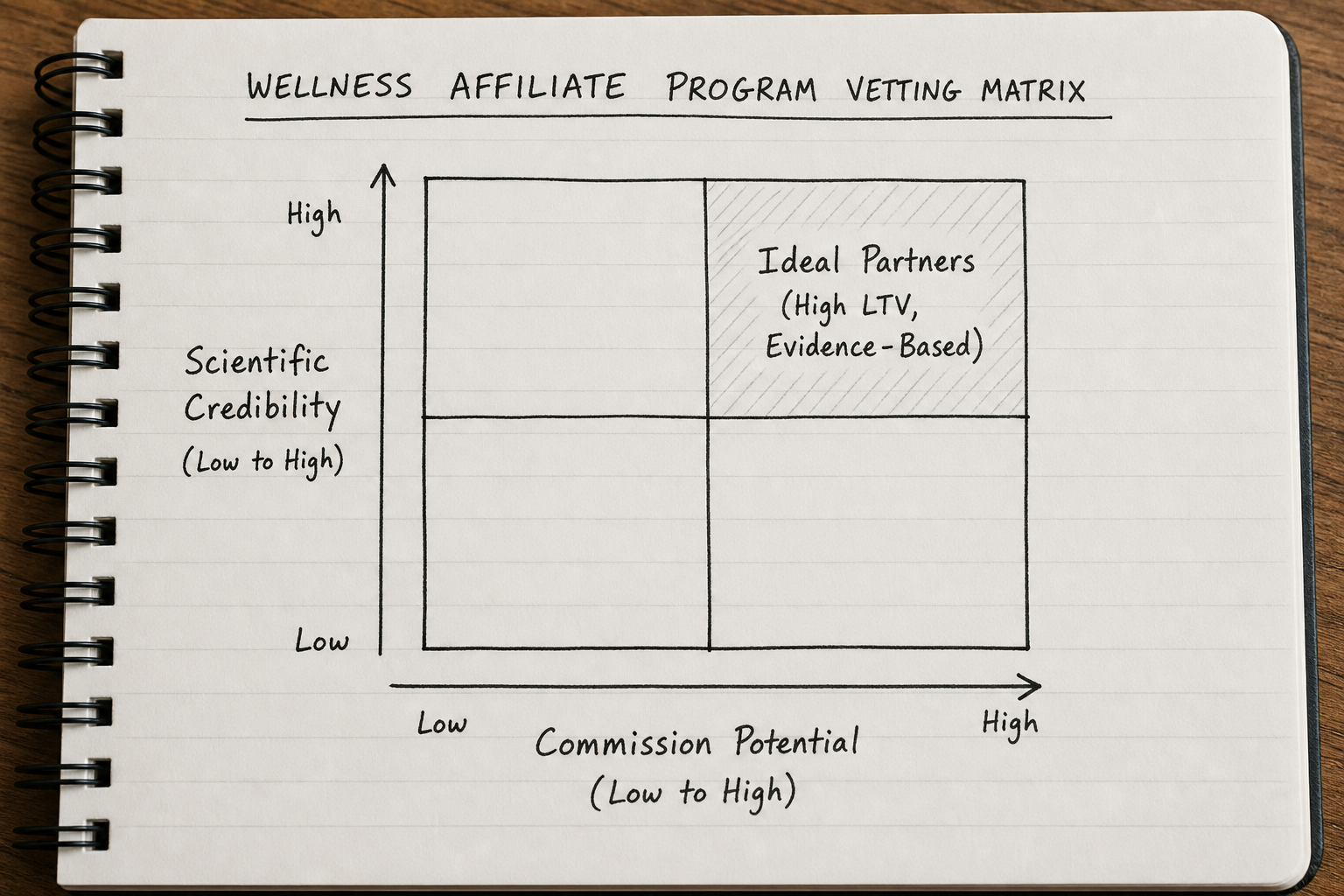 By filtering for these criteria, you protect your brand while maximizing your earning potential. Let’s dive into the programs that pass the test.
7 Top Wellness Affiliate Programs for Health Bloggers
These seven programs span mental health, wearables, preventative testing, and nutrition. They have been selected based on their market authority, their robust affiliate tracking infrastructure, and their high conversion rates for targeted content.
1. BetterHelp
BetterHelp is the largest online therapy platform in the world. Mental health is no longer a taboo subject; it is a massive component of mainstream wellness content.
- Commission Rate: Flat CPA, typically ranging from $90 to $150 per paid sign-up (depending on your traffic volume and network negotiation).
- Cookie Duration: 30 days.
- Platform: In-house / Impact Radius.
The Product Angle: BetterHelp removes the friction of traditional therapy. Users don't have to commute to a clinic, they can message their therapist anytime, and they are matched via a highly optimized onboarding quiz.
Why It Converts: The onboarding quiz is the secret to BetterHelp's affiliate success. When you send traffic to their site, the user isn't immediately asked for a credit card. They are asked questions about their mental state, their goals, and their preferences. By the time they reach the paywall, they are highly invested in the personalized solution.
Content Strategy: Do not try to diagnose your readers. Instead, weave BetterHelp into broader lifestyle content. Articles like "How to Manage Founder Burnout," "Post-Partum Fitness and Mental Health," or "The Link Between Sleep and Anxiety" provide natural transition points to recommend professional support.
2. Oura Ring
The Oura Ring has become the gold standard for sleep and recovery tracking. Unlike bulky wrist wearables, it is a discreet ring packed with advanced sensors measuring heart rate variability (HRV), blood oxygen, and body temperature.
- Commission Rate: Generally 8% to 10% per sale.
- Cookie Duration: 30 days.
- Platform: Impact Radius.
The Product Angle: This is a high-ticket item. With rings starting around $299 plus a monthly subscription fee, an 8-10% commission yields a solid payout per conversion.
Why It Converts: Oura has achieved premium status. It is worn by professional athletes, tech CEOs, and celebrities. The brand awareness is incredibly high, meaning you don't have to sell the concept of the ring; you just have to help the reader decide if it's the right tool for them.
Content Strategy: Deep-dive comparative data wins here. "Oura Ring vs. Apple Watch for Sleep Tracking" or "My Oura Ring Data After 6 Months of Quitting Alcohol." Readers looking at these products want to see real dashboards, screenshots of the app, and honest assessments of the battery life and subscription costs.
3. InsideTracker
InsideTracker is a personalized health analytics company. Users purchase a blood testing kit (or upload existing lab results), and the platform analyzes their biomarkers to provide actionable, science-backed nutrition and lifestyle recommendations.
- Commission Rate: Varies, but often $40–$50 flat CPA or up to 15% on high-ticket test packages (which can cost $500+).
- Cookie Duration: 30 days.
- Platform: CJ Affiliate / Refersion.
The Product Angle: Preventative wellness and "biohacking." InsideTracker appeals to the data-obsessed health consumer who wants to optimize their longevity, rather than just waiting until they get sick to see a doctor.
Why It Converts: The medical advisory board is top-tier (including researchers from Harvard and Tufts). This lends immense credibility to your recommendation.
Content Strategy: Case studies. Document your own experience. Take a baseline test, implement specific dietary changes for 90 days, and take a follow-up test. Publishing the tangible before-and-after biomarker data (like lowered cortisol or optimized Vitamin D) creates an incredibly compelling pitch for the affiliate link.
4. Seed (DS-01 Daily Synbiotic)
Seed has disrupted the massive probiotic market by introducing rigorous scientific validation to a space usually filled with snake oil. Their DS-01 is a 2-in-1 prebiotic and probiotic formulated with specific, clinically studied strains.
- Commission Rate: Extremely aggressive—often 25% to 100% of the first month’s subscription cost for the customer.
- Cookie Duration: 30 days.
- Platform: ShareASale / Direct.
The Product Angle: Gut health is foundational to almost every other wellness topic, from skin clarity to immune function to mental clarity.
Why It Converts: Seed’s affiliate program (often called "Seed University") requires partners to actually pass a short educational course on microbiome science before they can generate links. This ensures affiliates speak accurately about the product, which elevates the brand's premium positioning. Their packaging is also highly aesthetic and sustainable, making it very photogenic for social media.
Content Strategy: Education-first content. Break down the difference between "survivability" of probiotic strains in stomach acid versus standard grocery store yogurt. Explain the gut-brain axis. Seed performs exceptionally well on email lists where you have the space to educate the reader over a few days.
5. Noom
Noom bills itself as a consumer-led digital health company that helps people live healthier, longer lives, primarily focusing on behavior change and psychology rather than strict calorie counting.
- Commission Rate: Typically $15 to $30 CPA per trial sign-up or paid subscription.
- Cookie Duration: 30 days.
- Platform: Impact Radius / CJ Affiliate.
The Product Angle: Sustainable weight loss through psychological reprogramming. It appeals to people who are exhausted by yo-yo dieting.
Why It Converts: Similar to BetterHelp, Noom relies on a brilliant, multi-step quiz to build intent. As the user clicks through questions about their past dieting failures, their ideal weight, and their daily habits, they become highly invested. By the time they are asked to start a trial, the conversion rate is exceptionally high.
Content Strategy: Focus on the psychology of habits. "Why Restrictive Diets Fail (And What to Do Instead)" or "How to Stop Binge Eating at Night." Position Noom as the tool to fix the habit, not just a tool to track the calorie.
6. Thrive Market
Thrive Market is an online membership-based market that delivers highest-quality, healthy, and sustainable products at member-only prices. Think of it as an online hybrid of Whole Foods and Costco.
- Commission Rate: Typically $5 to $20 CPA per new annual membership signup.
- Cookie Duration: 7 to 14 days.
- Platform: CJ Affiliate.
The Product Angle: Convenience and cost-savings for specialty diets (keto, paleo, vegan, gluten-free).
Why It Converts: The barrier to entry is low. Everyone buys groceries, and Thrive Market frequently offers massive sign-up incentives (like "Get $60 in free groceries when you join"). As an affiliate, you are essentially giving away free high-quality food to your audience, which makes the pitch incredibly easy.
Content Strategy: "Pantry tours" and recipe integrations. If you are a food or lifestyle blogger, don't just review Thrive Market. Publish a recipe for a gluten-free protein muffin and link every single dry ingredient directly to Thrive Market. Create an "Ultimate Keto Pantry Stocking Guide."
7. Headspace
Headspace is a pioneer in digital mental wellness, offering guided meditations, sleep casts, and focus music.
- Commission Rate: Up to 50% on subscription purchases.
- Cookie Duration: 30 days.
- Platform: Impact Radius.
The Product Angle: Accessible, secular mindfulness for beginners.
Why It Converts: The app interface is universally loved, and they offer a robust free trial. The brand is highly trusted, meaning users rarely hesitate to download the app based on a recommendation.
Content Strategy: Integration into productivity and morning routine content. Headspace doesn't just appeal to the traditional "spiritual" wellness audience. It appeals heavily to the "optimization" crowd. Articles like "A 5-Step Morning Routine for Deep Work" are perfect vehicles for a Headspace affiliate link.
Traffic and Conversion Strategies for Wellness Affiliates
Having the right links is only ten percent of the battle. In the modern search landscape, a generic listicle of "10 Best Meditation Apps" is unlikely to rank without massive domain authority.
To build a real affiliate marketing side hustle in the wellness space, you have to bypass direct head-to-head SEO combat and build localized funnels.
The Quiz Funnel Approach
Because wellness is deeply personal, generic recommendations convert poorly. A reader looking for joint pain relief does not want the same supplement as a reader looking for better sleep.
Instead of listing all your affiliate links on one page, route your traffic to an interactive quiz. Tools like Typeform or Interact allow you to create simple diagnostics (e.g., "What is Your Sleep Chronotype?" or "Discover Your Core Nutritional Gap").
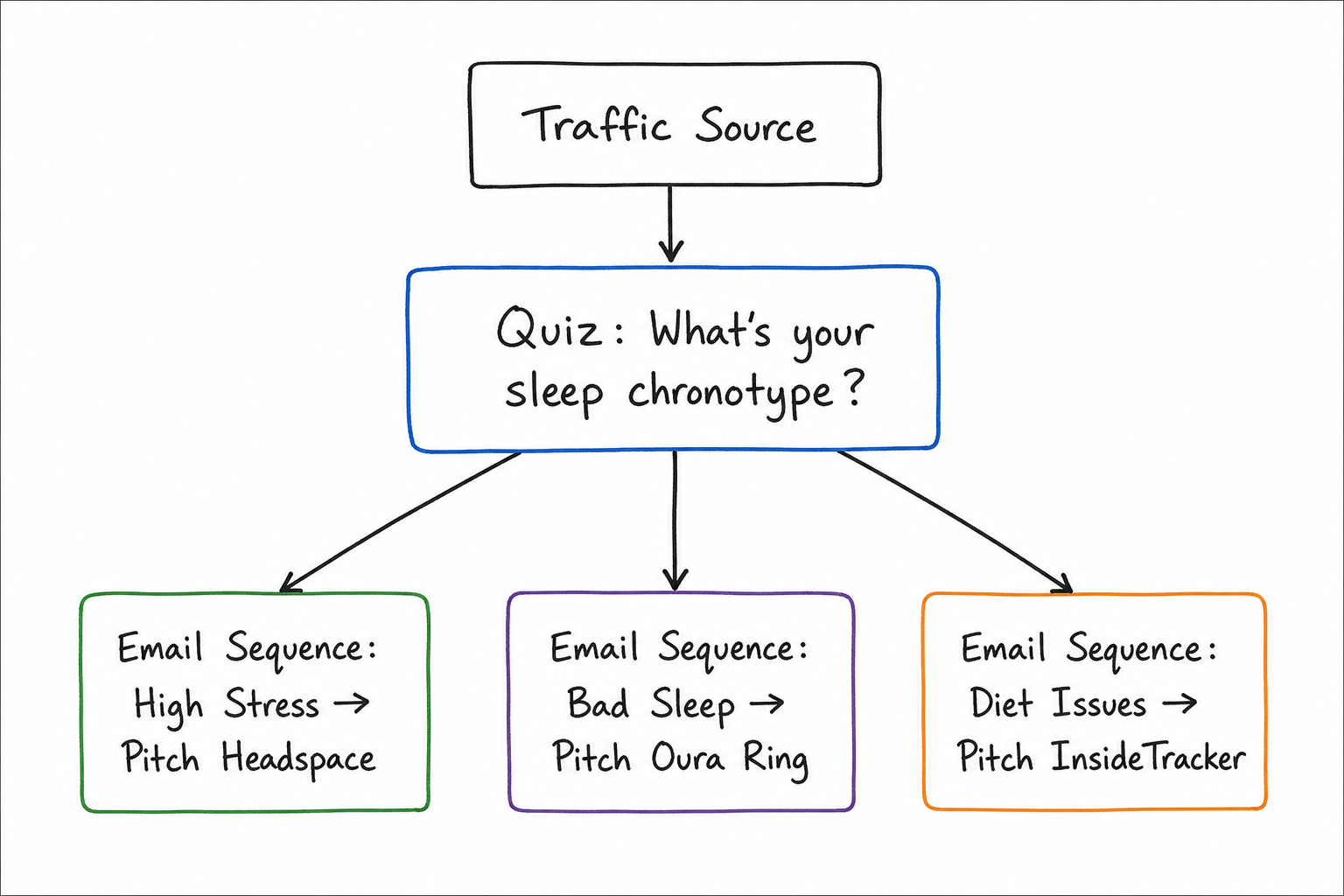 Based on their answers, the user is segmented into a specific email sequence. If they indicate high stress and poor sleep, your automated emails can pitch Oura Ring to diagnose the problem and Headspace to manage the stress. If they indicate gut issues, the sequence pitches Seed. This hyper-personalization can increase conversion rates by 300% to 400% compared to static blog links.
Leveraging Pinterest for Top-of-Funnel Traffic
Pinterest is essentially a visual search engine where the demographic perfectly aligns with the wellness market. Users actively use Pinterest to plan lifestyle changes, find recipes, and discover workout routines.
If you are struggling with Google's YMYL updates, transitioning your top-of-funnel strategy to Pinterest can provide a steady stream of highly motivated traffic. Create tall, visually appealing pins highlighting specific health results or step-by-step routines.
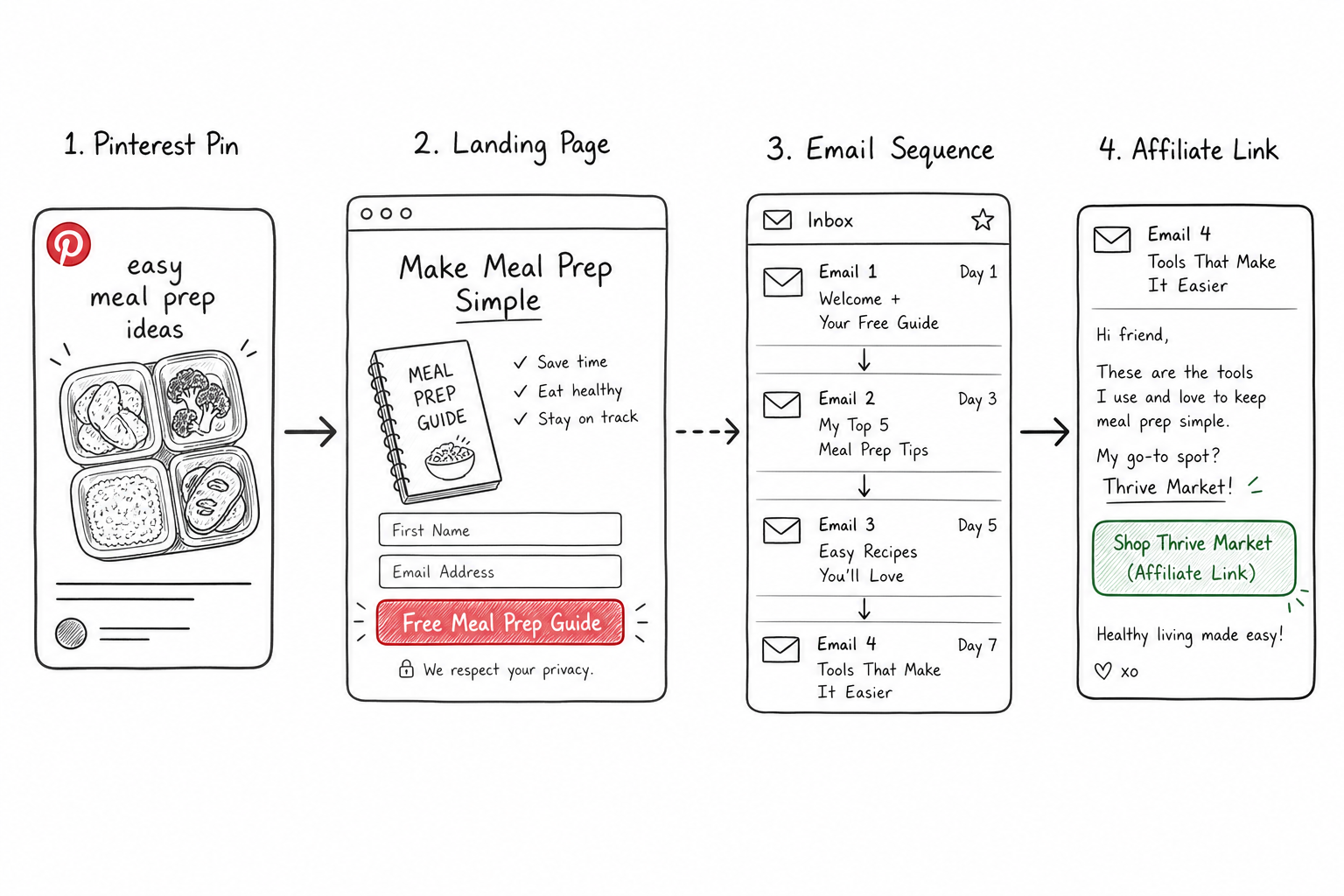 Route that Pinterest traffic to a dedicated landing page offering a free lead magnet (like a 7-day meal plan), and then introduce your affiliate programs within the meal plan PDF or the follow-up email sequence. For a detailed breakdown of this platform, review our guide on setting up affiliate marketing on Pinterest.
The YMYL Reality Check: Compliance and Trust
The most profitable programs are also the most regulated. When promoting wellness affiliate programs, you must treat your content as a professional publication.
If you want to know how to pick a niche for affiliate marketing successfully, you have to accept the rules of engagement for that niche. In wellness, this means strict adherence to FTC guidelines and medical compliance.
- Never Diagnose or Prescribe: Always use language like "support," "maintain," or "assist." Never use words like "cure," "prevent," or "treat." Saying "This probiotic cures IBS" is not only illegal without FDA approval, but it will also get you banned from the affiliate program instantly.
- Clear and Unavoidable Disclosures: Slapping a tiny, grayed-out "affiliate link" text at the bottom of the page is no longer acceptable. The FTC requires clear, conspicuous disclosure before the user clicks the link. Something simple like, "I independently review everything I recommend. When you buy through our links, we may earn a commission." should be visible at the top of the post.
- Cite Real Science: If you claim that a specific ingredient in a supplement lowers cortisol, link to a peer-reviewed study on PubMed. This builds trust with your reader and signals to search engines that your content is backed by consensus data.
If an affiliate program makes outrageous claims on their landing page, run the other way. You can learn more about vetting programs and avoiding scams in our guide: Is Affiliate Marketing Legit? (How to Spot Real Offers).
Wrapping Up Your Wellness Affiliate Strategy
The health and wellness niche is one of the most rewarding spaces for content creators. You have the genuine opportunity to connect people with tools that improve their daily lives, their mental health, and their physical longevity.
By prioritizing high-ticket digital subscriptions and scientifically validated physical products—and by wrapping those links in nuanced, experience-driven content—you can build an affiliate portfolio that is both highly profitable and fundamentally helpful. Focus on the data, build personalized funnels, and treat your audience's health with the respect it deserves.