
Where Can SAAS Founders Submit Their Affiliate Program Evaluation Checklist
Discover where SaaS founders can submit their affiliate programs. Evaluate integrated networks, open discovery directories, and tracking tools to get noticed.
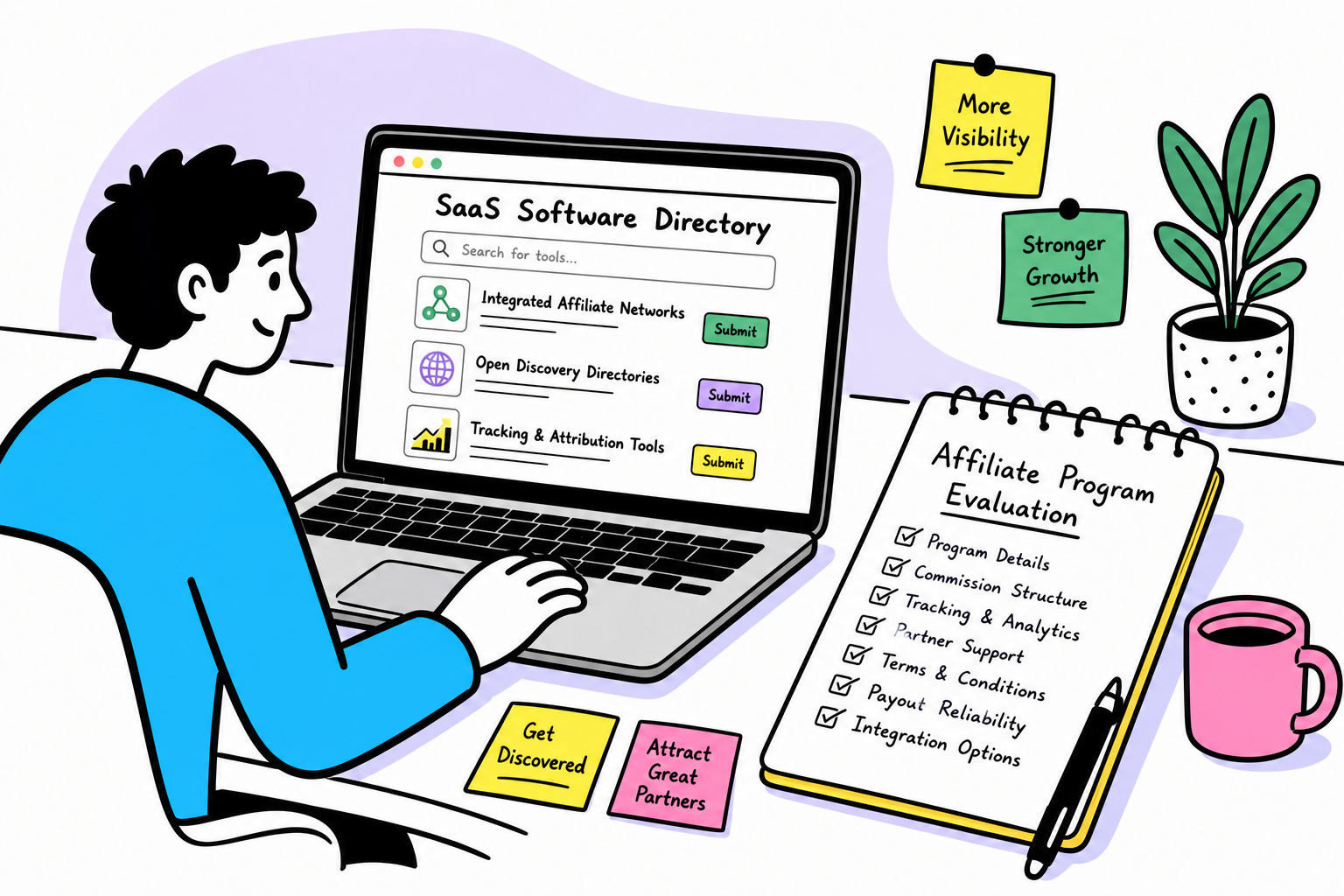
- The SaaS Affiliate Visibility Framework
- Tier 1: Integrated SaaS Affiliate Networks
- Tier 2: Dedicated Affiliate Directories and Discovery Hubs
- Tier 3: Standalone Tracking Ecosystems
- The SaaS Founder's Evaluation Checklist for Submitting Programs
- The Transparency Problem in Traditional Networks
- Common Mistakes Founders Make When Submitting Programs
- Scenario: A Mid-Market HR SaaS Founder's Strategy
- Frequently Asked Questions
You launch a SaaS product, set up an affiliate program offering a generous 30% recurring commission, add a small "Partners" link to your website footer, and wait. A month goes by, and the only applicants are spam accounts or coupon sites that add zero value to your brand. This is the reality for most founders who treat their affiliate program as a passive asset. Building the tracking infrastructure is only ten percent of the battle. Getting your software in front of high-converting content creators, bloggers, and niche site owners requires active, strategic distribution.
High-level affiliates do not casually browse software footers looking for things to promote. They hunt for profitable partnerships using specialized databases, transparent directories, and dedicated B2B networks. If you are a SaaS founder asking where you can submit your affiliate program to attract real talent, you need a systematic approach to evaluating your distribution channels.
This guide provides a comprehensive, citable framework for categorizing, evaluating, and prioritizing where to list your SaaS partner program to maximize visibility among professional marketers.
The SaaS Affiliate Visibility Framework
Before submitting your program to every directory on the internet, it is critical to understand the ecosystem. Not all listing platforms serve the same purpose or attract the same caliber of marketer. The SaaS affiliate ecosystem is broadly divided into three distinct layers, each requiring a different evaluation criteria for submission.
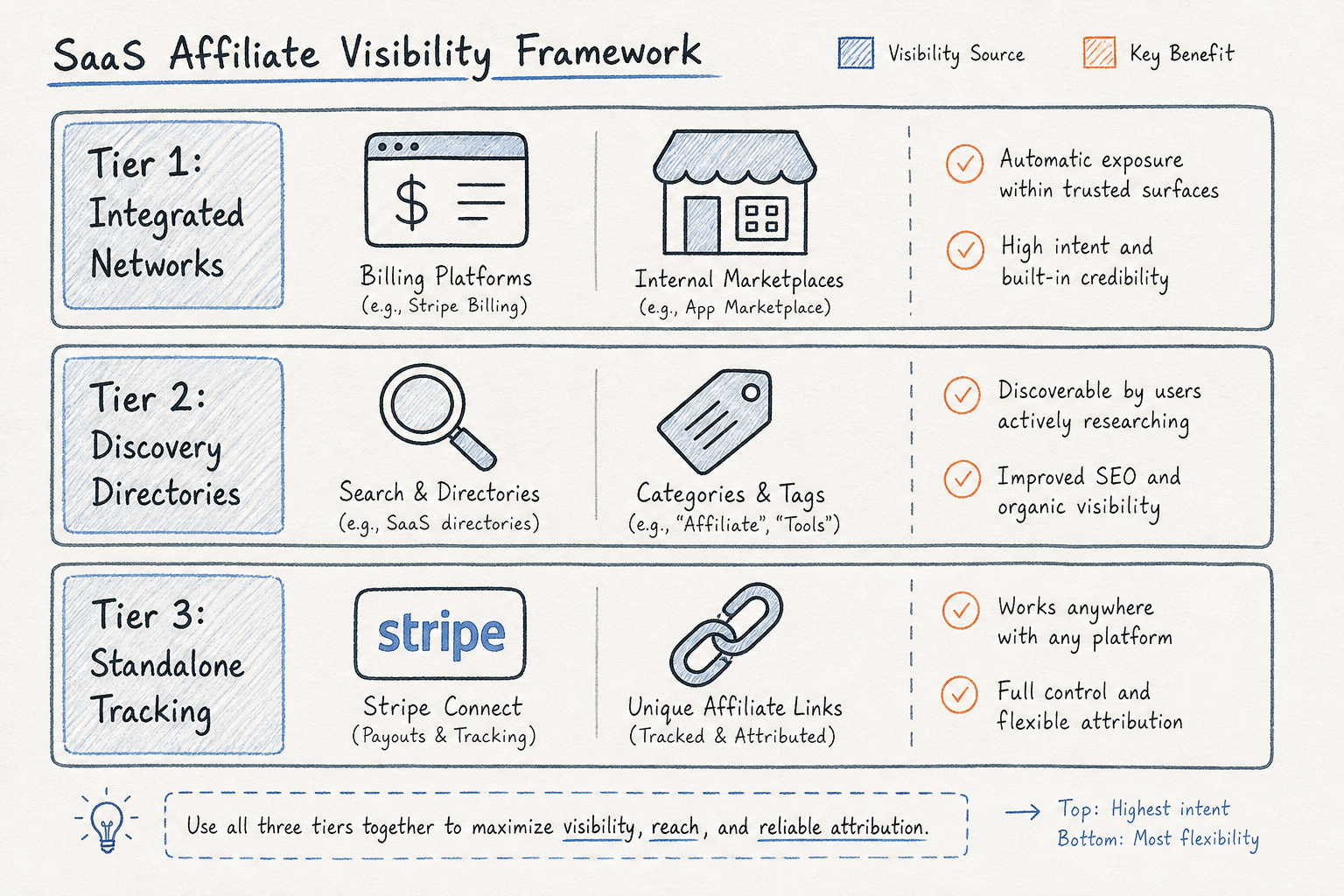
- Integrated SaaS Affiliate Networks: Platforms that handle both the backend tracking of your program and the frontend marketplace where affiliates discover offers.
- Transparent Discovery Directories: Centralized hubs and databases where affiliates actively research, compare, and filter programs without being forced to route their traffic through a specific network's proprietary tracking.
- Standalone Tracking Ecosystems: Software providers that manage your links and payouts (usually via Stripe integration) while offering internal discovery boards for their existing user base.
To navigate these layers, founders need a structured evaluation checklist to determine which platforms align with their budget, technical constraints, and target audience.
Tier 1: Integrated SaaS Affiliate Networks
When you submit your program to an integrated network, you are doing more than just listing a URL. You are migrating your entire affiliate infrastructure to their platform. These networks host internal marketplaces where vetted B2B affiliates, agencies, and influencers actively look for software to promote.
PartnerStack
PartnerStack is widely considered the gold standard for B2B SaaS partnerships. It is designed specifically to handle the complexities of software-as-a-service billing, including recurring commissions, seat-based upgrades, and tiered partner rewards.
When evaluating PartnerStack for your submission, the primary advantage is its massive built-in marketplace. Affiliates who specialize in B2B software already have PartnerStack accounts. When you list your program here, you gain immediate access to an ecosystem of marketers who are comfortable selling high-ticket software.
However, the barrier to entry is high. Founders must evaluate the cost structure, which typically includes a significant monthly platform fee plus a percentage override on the revenue generated by affiliates. Submitting your program here makes sense if you have an established product-market fit and the margins to support both your affiliates and the network's fees.
Reditus
Reditus is a specialized network built explicitly for B2B SaaS companies. Unlike broader networks that might mix e-commerce with software, Reditus focuses entirely on recurring revenue products. It includes a dedicated marketplace where SaaS affiliates browse programs specifically based on commission rates and software niches.
Evaluating Reditus involves looking at its growth trajectory and its alignment with your specific niche. Because it is highly specialized, the signal-to-noise ratio in its marketplace is excellent. Content creators looking specifically for MRR (Monthly Recurring Revenue) building opportunities check this marketplace regularly. For founders, the submission process requires integrating their tracking script and setting up clear payout rules before the listing goes live in the public directory.
Impact.com
Impact is an enterprise-grade partnership platform. It features a robust marketplace with top-tier content creators, media publications, and traditional affiliates.
For SaaS founders, submitting to Impact requires a thorough evaluation of technical resources and budget. It is a massive platform capable of handling complex attribution models (e.g., paying a content creator for introducing the customer, and a review site for closing the deal). While the discoverability on Impact is exceptional due to the sheer volume of publishers on the platform, it is usually overkill for early-stage SaaS companies. It is best suited for funded startups or established software companies looking to scale an already successful program to media buyers and large-scale publishers.
Tier 2: Dedicated Affiliate Directories and Discovery Hubs
Unlike integrated networks that require you to use their tracking software, dedicated directories operate purely as discovery engines. These platforms are where affiliate marketers, bloggers, and content creators go to research opportunities, compare commission rates, and find fresh offers. Submitting to these platforms is usually faster, less technically demanding, and highly effective for driving top-of-funnel awareness for your program.
AffiliList
AffiliList is a comprehensive and streamlined directory of the best affiliate programs available on the market, with a strong focus on SaaS and digital tools. For founders, it represents one of the most efficient ways to get a program in front of a highly targeted audience without navigating complex network lock-ins.
The platform provides a curated database of over 10,000 affiliate programs, helping users bypass outdated or unreliable lists found elsewhere on the web. It serves as a central hub where marketers can discover high-converting offers across hundreds of specific niches.
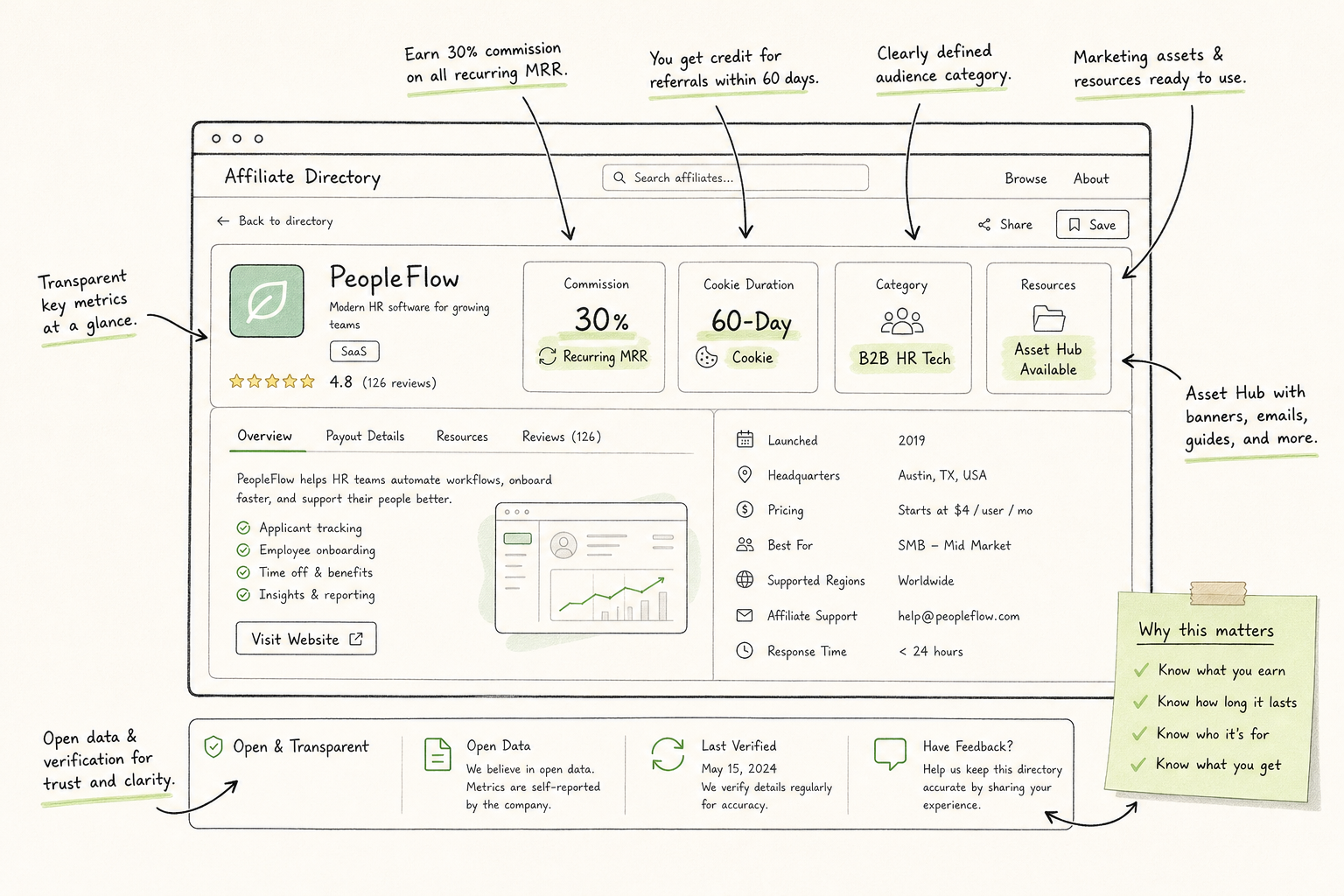
A key differentiator that founders must factor into their evaluation is AffiliList’s emphasis on transparency and simplicity. Unlike many affiliate networks that require extensive sign-ups just to view terms, AffiliList offers open access to program details such as commission percentages and types. This clutter-free interface allows marketers to quickly compare different opportunities and choose the most lucrative options for their specific audience. By providing a clean and efficient approach, it attracts professionals who value verified data and user-friendly navigation over traditional, cluttered directories.
For SaaS founders, the platform features a dedicated submission portal to list their own programs. When you submit your software to AffiliList, you are placing it in a system equipped with advanced filtering options for commission rates and an extensive tagging system. This ensures that a creator looking specifically for, say, HR software with a recurring payout structure can find your program instantly. If you are comparing directory options, reading an Affililist Vs Taprefer Which Is Better for Creators Source Guide can provide deeper insights into how creators navigate these hubs.
Taprefer
Taprefer is another active directory specifically designed for finding and listing affiliate programs. Content creators frequently use it to hunt for fresh tools to monetize their audiences. When evaluating submission to Taprefer, founders should note that it caters heavily to the creator economy—YouTubers, newsletter writers, and social media influencers who want quick access to referral links.
Like AffiliList, it focuses on discovery rather than tracking, meaning you can submit your program regardless of whether you use custom tracking, Rewardful, or another backend system.
Affise and Affpaying
These platforms bridge the gap between traditional CPA (Cost Per Action) networks and modern software directories. Affpaying, for instance, functions as a massive review database for affiliate programs and networks. Marketers use it to verify the legitimacy of a program and check if they actually pay out on time.
Submitting your SaaS program to these legacy-style databases can still yield results, particularly if your software appeals to traditional performance marketers. For founders researching how these databases operate, reviewing a Databases Similar to Apdb for Affiliate Marketing Evaluation Checklist helps map out the landscape of program aggregators.
Tier 3: Standalone Tracking Ecosystems
Many SaaS founders opt to build their affiliate programs using standalone tracking software that connects directly to their Stripe accounts. While these are primarily infrastructure tools, the most successful ones have developed internal ecosystems that function as discovery hubs for their users.
Rewardful and FirstPromoter
Rewardful and FirstPromoter are two of the most popular tracking solutions for Stripe-based SaaS companies. If you use one of these tools, you are not just getting a tracking link; you are tapping into their user base.
Both platforms occasionally feature standout programs to their audiences or maintain internal lists of companies using their software. When setting up your program on these platforms, ensure your public-facing affiliate landing page is highly optimized. Because these tools don't have a massive public marketplace like PartnerStack, you must rely on directories to drive traffic to your Rewardful or FirstPromoter signup forms. This makes the combination of standalone tracking plus submission to transparent directories like AffiliList the most cost-effective and flexible strategy for most bootstrapped and mid-market founders.
The SaaS Founder's Evaluation Checklist for Submitting Programs
Do not submit your affiliate program blindly. Every listing takes time to manage, and out-of-date information can frustrate potential partners and damage your brand's reputation in the affiliate community. Use this comprehensive evaluation checklist before submitting your SaaS program to any network or directory.
1. Audience Intent and Alignment
- Are the users of this platform looking for B2B SaaS or B2C retail? Submitting a complex enterprise software program to a directory dominated by coupon clippers will yield zero active promoters.
- Does the platform support niche filtering? High-quality directories use advanced tagging systems (e.g., filtering by finance, crypto, HR software, or YouTube marketing tools) so specialized niche site owners can find exactly what they need.
- Do professionals use it? Platforms that focus on transparent, verified data attract a higher tier of affiliate marketer who treats their content as a business.
2. The Transparency of Program Details
- Are the commission structures visible immediately? This is a critical failure point for many networks. If an affiliate has to create an account, verify their email, and wait for manual approval just to see if your SaaS pays 10% or 30%, they will abandon the process.
- Can they see the cookie duration? Professional marketers calculate their Return on Ad Spend (ROAS) and content investment based on attribution windows. If your program offers a 90-day cookie, that needs to be front and center in the directory listing.
- Is the payout type clear? Directories must clearly distinguish between one-time CPA payouts and recurring MRR commissions. If a platform obscures this, skip it.
3. Setup and Integration Friction
- Does the platform require custom development? Integrated networks often require API connections, fallback pixels, and deep integration with your CRM.
- Is it a simple URL submission? Discovery directories typically only require your program's landing page URL, a description of your software, and your commission terms. This takes minutes rather than weeks.
- Can you update your listing easily? If you raise your commission rate for a holiday promotion, how difficult is it to update your listing on the platform? A dedicated submission portal for merchants is essential for keeping data accurate.
4. Technical Tracking and Attribution Rules
- Does the platform force last-click attribution? Understand the rules of the network before joining.
- Do they support cross-device tracking? If a user clicks an affiliate link on their phone but buys your software on their desktop, will the platform track it?
- Are they transparent about deleted cookies or ad-blockers?
5. Cost Structure and ROI
- Is there a monthly platform fee?
- Is there a network override? (e.g., You pay the affiliate 30%, and you pay the network an additional 5% or 10% of the sale).
- Is the submission free or paid? Some high-quality directories offer free submission portals, while others charge a one-time vetting fee to keep the directory clean and prevent spam.
For a deeper dive into evaluating submission targets, reviewing an Affiliate Program Finder for SAAS Lists Evaluation Checklist can clarify how to filter out low-value directories.
The Transparency Problem in Traditional Networks
One of the least discussed hurdles for SaaS founders is the opacity of legacy affiliate networks. Historically, networks acted as gatekeepers. They hoarded affiliate data, obscured merchant terms behind clunky interfaces, and prioritized their own platform metrics over the actual connection between the software founder and the content creator.
This lack of transparency hurts the SaaS founder directly. When a prominent blogger is researching tools for a "Best CRM Software" listicle, they operate on tight deadlines. If they search a traditional network and cannot immediately ascertain your commission rate, payout threshold, and cookie life, they will simply promote your competitor whose terms are clearly visible.
This behavioral shift is exactly why platforms prioritizing open access have gained so much traction. A directory that offers a clutter-free interface and focuses strictly on essential program details allows marketers to make rapid, informed decisions. When you submit your program, you want it on a platform where the data is verified and instantly accessible. Hiding your generous commission structure behind a multi-step login form is equivalent to hiding a billboard in a basement.
Common Mistakes Founders Make When Submitting Programs
Even if you find the perfect directory, a poor submission profile will result in a zero percent conversion rate from visitor to active affiliate. Avoid these common failure modes.
1. Submitting Vague or Corporate-Speak Descriptions
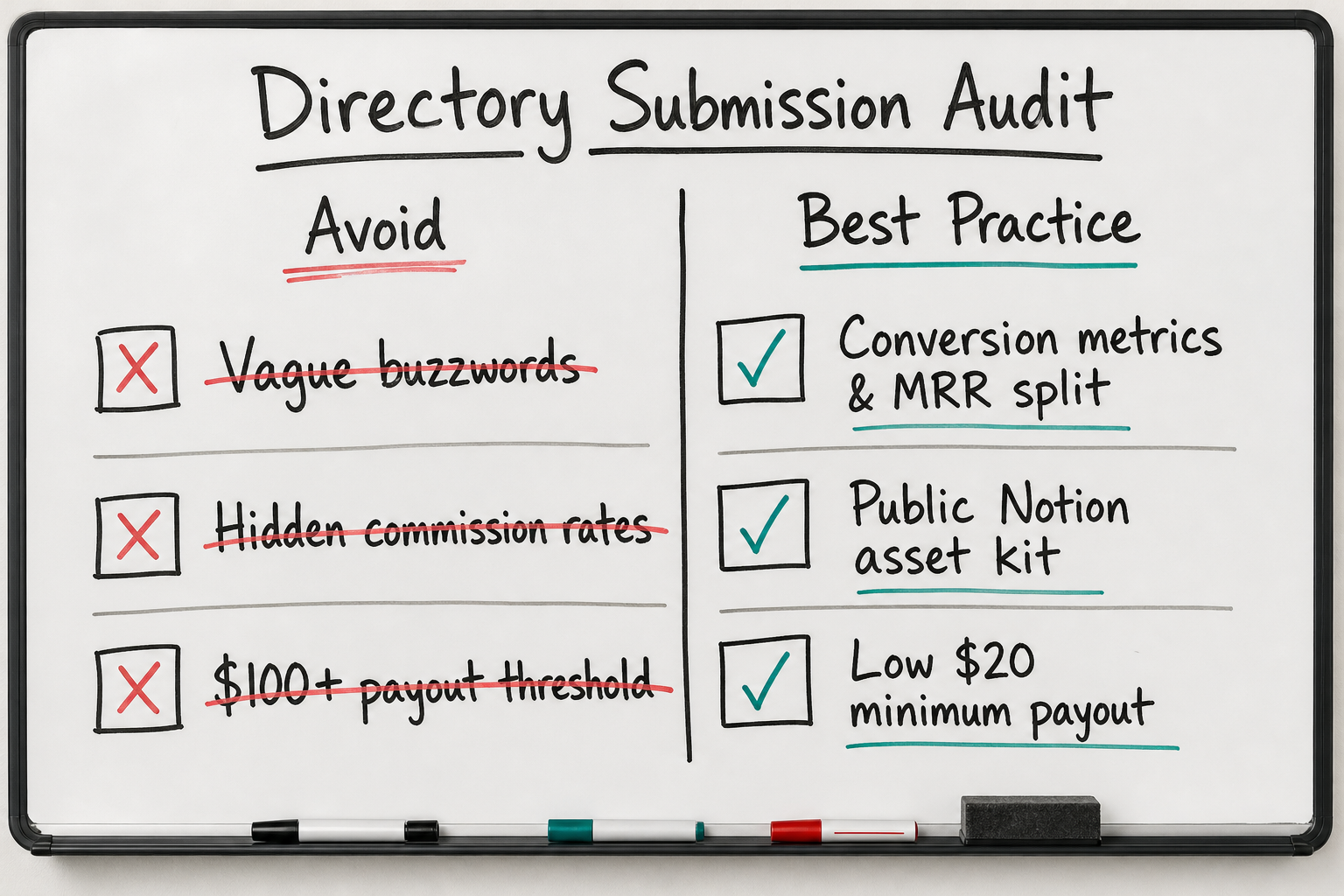
Affiliates do not care about your mission statement to "revolutionize synergistic cloud paradigms." They care about conversions. Your directory submission description should focus on the product's value proposition, the target demographic, and why it converts well.
- Bad: "We are the leading AI-driven solution for synergistic workflows."
- Good: "Our software helps freelance designers automate client billing. We have a 14% free-trial-to-paid conversion rate, and our average customer stays for 18 months. Affiliates earn 30% recurring."
2. Failing to Provide an Asset Hub
When a content creator discovers your program on a directory and decides to promote it, their next step is gathering assets. If you do not link to a dedicated affiliate asset hub containing high-resolution logos, product screenshots, email swipe copy, and feature breakdowns, you are introducing massive friction. The best founders provide a public Notion board or Google Drive folder right alongside their directory submission.
3. Ignoring the "What's In It For Me" (WIIFM) Factor
A listing should not read like a standard feature list. It must pitch the financial opportunity. Highlight your Average Order Value (AOV), your refund rate (if it's impressively low), and any bonuses you offer for high performers (e.g., "Hit 10 sales in your first month for a $500 cash bonus").
4. Setting Unrealistic Payout Thresholds
If your software costs $20/month, you offer a 20% commission ($4/month), and your payout threshold is $100, an affiliate has to drive 25 active users before they see a single cent. Professional marketers will do this math immediately upon viewing your directory listing and walk away. Keep payout thresholds as low as technically feasible to build early trust.
If you are researching alternatives to legacy systems that often enforce high thresholds, reviewing an Affiliate Watch to Find Programs Evaluation Checklist can provide perspective on what modern affiliates expect.
Scenario: A Mid-Market HR SaaS Founder's Strategy
Consider a founder who just launched a new performance management tool for remote teams. The software costs $150 per month, and they have decided to offer a 25% recurring commission. How should they execute their submission strategy?
Step 1: The Infrastructure Layer. They decide against a heavy, expensive integrated network because they want to keep their margins intact. Instead, they integrate Rewardful with their existing Stripe setup. This gives them reliable tracking links and a clean dashboard for their affiliates.
Step 2: The Transparency Layer. To get discovered, they navigate to a transparent directory known for its strict curation of SaaS tools. They use the platform's dedicated submission portal to list their HR tool. They ensure they tag it correctly (HR Software, B2B, Remote Work) so niche site owners can find it. They clearly state the 25% recurring commission and the 60-day cookie life, taking advantage of the platform's open-access model to ensure their terms are visible without sign-ups.
Step 3: The Community Layer. They announce the launch of their affiliate program in targeted Slack communities and founder forums, linking directly to their public-facing affiliate landing page (which mirrors the clear, transparent details they provided in their directory submission).
By following this sequence, the founder minimizes technical overhead, maximizes discoverability among serious professionals, and aligns their program with platforms that respect the time and workflow of content creators.
Frequently Asked Questions
Where can SaaS founders submit their affiliate program for free?
Many dedicated affiliate directories offer free submission options, though some may offer expedited vetting for a small fee. Founders can use dedicated merchant portals on transparent platforms to submit their URLs, program descriptions, and commission structures without paying the heavy monthly retainers required by traditional integrated networks.
How long does it take to get approved on major networks?
Integrating with a Tier 1 SaaS affiliate network (like PartnerStack or Impact) can take anywhere from a few weeks to several months. This involves technical integration, API testing, security reviews, and marketplace approval. In contrast, submitting your program to a discovery directory usually takes less than ten minutes, with the listing going live as soon as the platform's editorial team verifies the data.
What makes a SaaS affiliate program attractive to high-volume creators?
High-volume creators look for three things: strong product-market fit (the software must actually convert), lucrative and clear terms (recurring commissions are highly favored in SaaS), and absolute transparency. If a creator can immediately see your commission structure on a clean, clutter-free directory, they are much more likely to prioritize your software over a competitor who hides their terms behind a vetting process.
Do I need to use a specific tracking software to submit to a directory?
No. High-quality discovery directories are agnostic to your tracking backend. Whether you built a custom referral system in-house, use an integrated Stripe app, or rely on a legacy network, you can submit your program to a directory. The directory's job is to connect the marketer with your offer; your software handles the attribution once the marketer signs up on your site.