
Where Tech Bloggers Find Affiliate Codes and Terms
Learn where tech bloggers find high-paying SaaS affiliate codes, compare program terms, and secure lucrative partnerships to monetize technical content.

Most tech bloggers do not fail because they lack traffic; they fail because they monetize the wrong way. Earning a few pennies from a generic Amazon affiliate link on a highly technical, 3,000-word software review is a classic misstep. Seasoned tech bloggers know that the real revenue lies in high-ticket software, SaaS subscriptions, and premium digital tools. But there is a persistent bottleneck in this process: figuring out exactly where the best programs live, what their terms actually are, and how to secure the tracking codes needed to attribute sales.
The tech affiliate ecosystem is highly fragmented. Unlike e-commerce, where a single network might house most of your physical product links, tech products are scattered across legacy affiliate networks, modern B2B partnership platforms, direct in-house tracking software, and curated directories. Worse, many networks hide their commission structures, cookie durations, and conversion rates behind a tedious application process.
This guide breaks down exactly where tech bloggers and digital entrepreneurs hunt for lucrative affiliate codes, how they evaluate the hidden terms, and the tools they use to bypass the traditional, cluttered networks.
The Three Main Avenues for Tech Affiliate Codes
When a content creator wants to promote a new cloud hosting provider, a productivity app, or a cybersecurity tool, they generally source their affiliate codes and tracking links from one of three places: aggregator directories, major third-party affiliate networks, or direct in-house programs.
Understanding the structural differences between these sources dictates how quickly you can find a code and what kind of data you have access to before you commit to promoting a product.
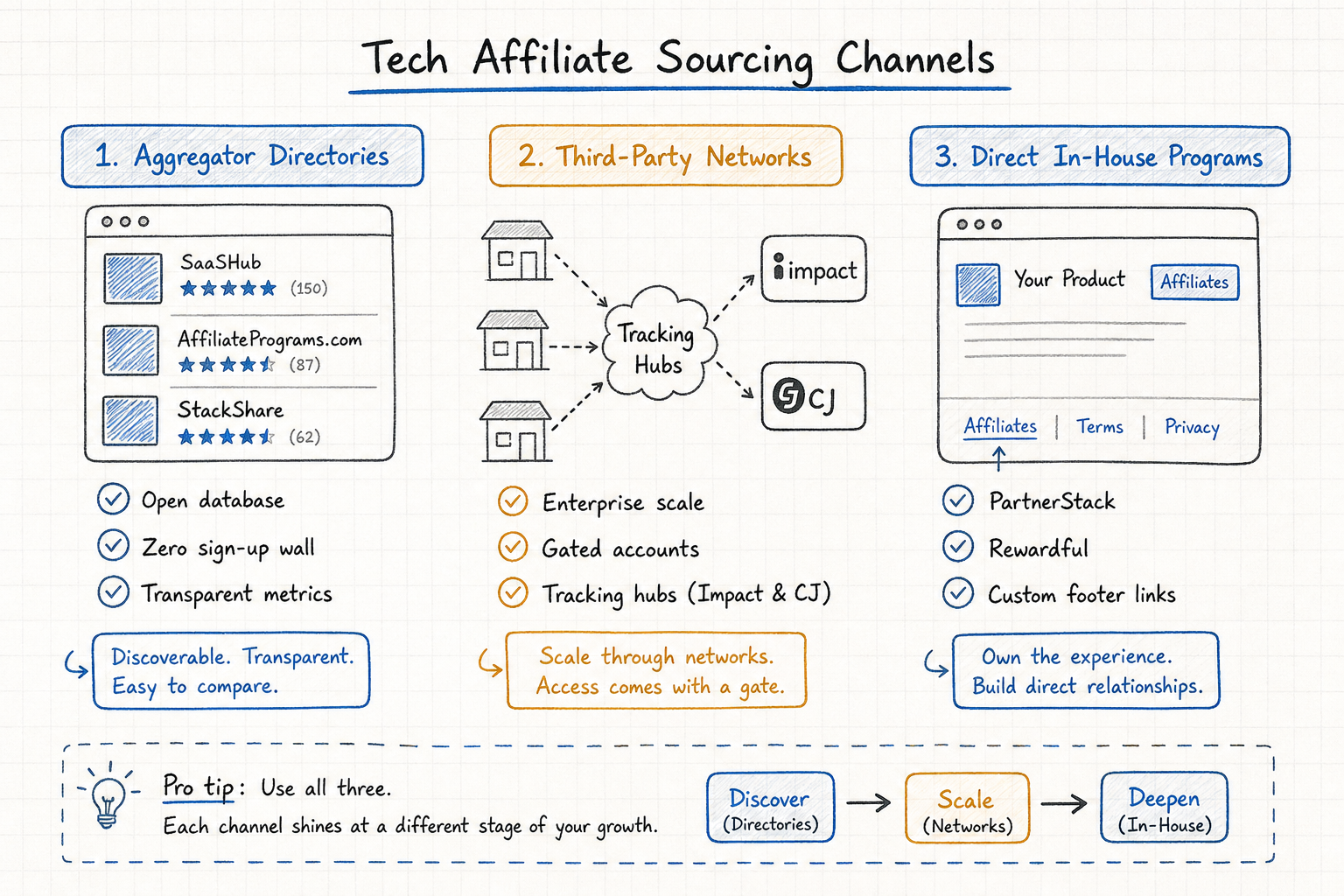
1. Affiliate Directories and Aggregators
Historically, if a blogger wanted to find a high-paying SaaS affiliate program, they had to rely on Google searches like "[Software Name] + affiliate program" or manually scour the footers of company websites. This manual process is slow and often yields outdated information regarding commission structures.
Today, professional niche site owners use curated directories to bypass the research phase entirely. Platforms like AffiliList serve as a centralized, transparent database where you can find over 10,000 affiliate programs, specifically heavily indexing SaaS and digital tools.
The primary advantage of using a modern directory over a traditional affiliate network is open access to data. Most major networks require you to create an account, verify your website, and sometimes even apply to a specific merchant just to see their payout terms. A directory flips this model. You can filter programs by commission percentage, product category (e.g., HR software, crypto, YouTube marketing tools), or payout type (recurring vs. one-time) without a mandatory sign-up wall.
By prioritizing transparency, directories allow you to compare opportunities side-by-side. If you are debating whether to promote Email Marketing Tool A or Email Marketing Tool B, seeing that Tool A offers a 30% recurring commission with a 90-day cookie while Tool B offers a flat $50 payout with a 15-day cookie immediately informs your content strategy. For those looking to browse high-converting software offers, starting with a Directory of software affiliate programs with high payouts saves hours of manual vetting.
Directories are also the fastest way to discover emerging tools before they become saturated by massive publications. For creators aiming to be first-to-market on software reviews, knowing Where to Find New Affiliate Programs through consistently updated databases is a distinct competitive advantage.
2. Major Third-Party Affiliate Networks
Once a blogger finds a program they want to promote via a directory, the actual tracking code and terms are usually managed by a third-party affiliate network. Tech companies outsource their partner programs to these networks to handle tracking infrastructure, tax compliance, and automated payouts.
Different networks specialize in different facets of the tech industry. You rarely find enterprise SaaS on the same network as WordPress themes.
- Impact (formerly Impact Radius): Currently the dominant force in SaaS, VPNs, and subscription technology. Impact offers a clean interface for affiliates to negotiate terms, generate custom tracking codes, and track cross-device conversions. Many modern tech startups migrate here as they scale.
- CJ Affiliate & Rakuten Advertising: These are legacy behemoths. They are the go-to networks for massive consumer electronics brands, established enterprise software suites, and legacy hardware companies. The interface can feel dated, and pulling a simple HTML link can be overly complex, but they house the exclusive rights to some of the largest tech companies in the world.
- ShareASale & Awin: A massive repository of web hosting providers, WordPress plugins, productivity apps, and developer tools. While ShareASale is incredibly popular, many tech bloggers eventually look for Best ShareASale alternatives for software and SaaS affiliate programs when they need more robust B2B tracking features.
- ClickBank: Heavily skewed toward info-products, digital courses, and specialized digital tools. ClickBank is known for extremely high commission rates (sometimes up to 75%), but the products require careful vetting by the blogger to ensure quality.
3. Direct In-House Brand Programs
Many modern SaaS companies, bootstrapped tech startups, and independent digital creators choose not to use a middleman network. The fees charged by major networks can be prohibitive for a startup. Instead, they run their own in-house affiliate programs.
Bloggers usually find these by scrolling to the very bottom of a tech company's website and clicking links labeled "Affiliates," "Partners," or "Referral Program." According to Affiliate.Watch, popular examples of direct tech affiliate programs include hosting services like Hostinger, freelance marketplaces like Fiverr, and productivity platforms like Notion.
When managing a program in-house, tech companies typically use white-label partnership software to generate links and track sales. Common backend platforms include:
- PartnerStack: Built specifically for B2B SaaS. It handles both affiliate links and reseller partnerships.
- Rewardful or FirstPromoter: Very common for Stripe-integrated SaaS startups.
- Thinkific or Teachable: Used heavily by tech creators selling coding courses or digital marketing training. For example, each affiliate on Thinkific has a unique referral code visible within their user profile that appears at the end of their tracking links.
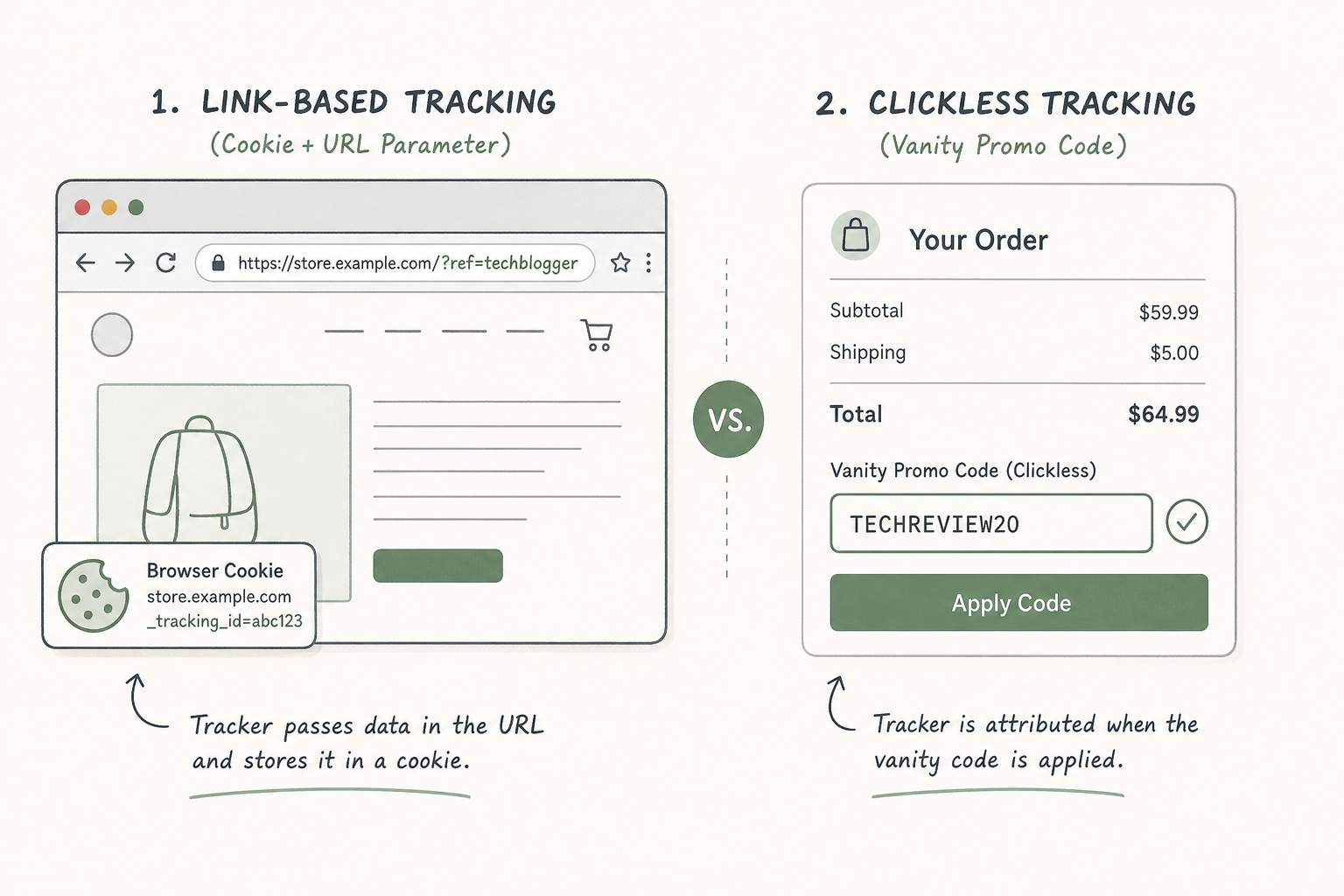
Tracking Links vs. Vanity Promo Codes
In the tech space, the term "affiliate code" is often used interchangeably, but it actually refers to two distinct tracking mechanisms. Knowing which one you need depends heavily on your traffic source.
Standard Affiliate Tracking Links
This is a standard URL containing your unique identifier (e.g., https://softwarecompany.com/?ref=techblogger).
When a user clicks this link, a cookie is placed on their browser. If they purchase the software within the designated cookie window (usually 30 to 90 days), the affiliate network automatically attributes the sale to your account. This is the bread and butter of written content like SEO blog posts, comparison articles, and email newsletters, where clicking a link is the primary call to action.
Vanity Promo Codes (Coupon Codes)
A vanity promo code is an alphanumeric string (e.g., TECHREVIEW20) that the user physically types into the checkout page to receive a discount.
For YouTubers, podcasters, and TikTok creators, standard tracking links are practically useless because audiences rarely click through descriptions on mobile or audio formats. Instead, creators negotiate a custom vanity code.
How to secure a vanity code: You will almost never find a vanity promo code sitting readily available in a generic affiliate dashboard. They require manual intervention from an affiliate manager. The process looks like this:
- Apply and get approved for the standard affiliate program.
- Generate your standard tracking link.
- Email the affiliate manager directly (their contact info is usually listed in the network dashboard).
- Pitch your traffic source and request a custom coupon code that maps directly to your affiliate ID.
Not all tracking software supports this, but as noted in industry discussions, many modern programs that offer recurring commissions are increasingly willing to map a custom code to an affiliate's account, allowing them to track sales entirely without a link click (referred to as "clickless tracking").
Uncovering the Fine Print: Evaluating Affiliate Terms
Finding an affiliate link is only 10% of the job. Evaluating the terms attached to that link dictates whether the program is actually worth your time.
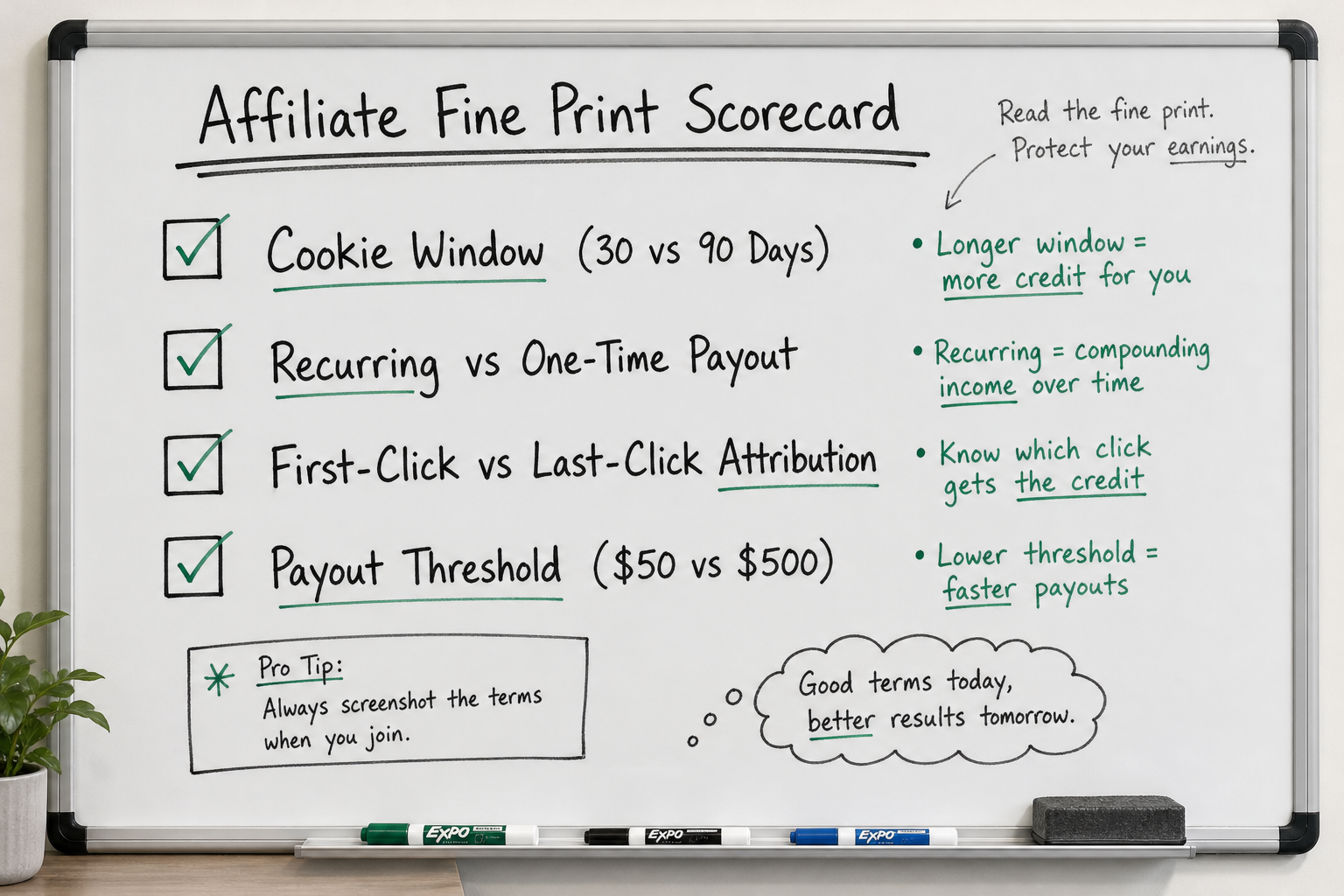
Many tech bloggers make the mistake of looking only at the headline commission rate. A 50% commission sounds incredible, but if it comes with a 24-hour cookie and a $500 payout threshold, you might never see a dime. Before dedicating 3,000 words to a software review, professional affiliates evaluate several hidden metrics. Utilizing a Vetted Tech Affiliate Listings for Social Media Influencers Evaluation Checklist can streamline this process, but the core criteria always include the following:
1. Cookie Duration (The Attribution Window)
When a reader clicks your link, a tracking cookie is stored in their browser. The cookie duration dictates how long you have to earn the commission if they delay their purchase.
In the tech space, B2B software decisions are rarely made on the first click. An IT manager researching a new CRM might read your review on Tuesday but wait until the next billing cycle to purchase.
- Poor: 24 hours (common in physical electronics, but unacceptable for SaaS).
- Standard: 30 days.
- Excellent: 90 to 120 days.
- Elite: Lifetime tracking (rare, but highly sought after).
2. Recurring vs. One-Time Payouts
SaaS products operate on monthly or annual subscriptions. Affiliate programs structure their payouts to match, offering either one-time bounties or recurring revenue.
- One-Time Bounty: You receive a flat rate (e.g., $100) or a percentage of the first month's payment when a user signs up. This is great for immediate cash flow.
- Recurring Commission: You receive a percentage (e.g., 20%) of the user's subscription fee every single month for as long as they remain a customer.
For tech bloggers aiming to build a stable, passive income business, recurring commissions are the holy grail. It creates a compounding revenue effect where a single successful article pays dividends for years. Finding these requires sifting through quality directories, as Best free directories to find high commission products will often tag or filter programs specifically by their recurring nature.
3. Attribution Models (First-Click vs. Last-Click)
Attribution rules determine who gets paid if a user clicks multiple different affiliate links before buying.
- Last-Click Attribution: The standard model. Whichever affiliate link the user clicked most recently before purchasing gets 100% of the commission. This favors coupon sites and aggressive retargeting.
- First-Click Attribution: Less common but highly favorable for content creators. If the user clicks your link to discover the software, you get the commission even if they later click a different blogger's link or a coupon code site before checking out.
If you are writing top-of-funnel educational content (e.g., "What is a headless CMS?"), you want to find programs offering first-click attribution, otherwise, you are just doing free research for bottom-of-funnel coupon sites.
4. Payout Thresholds and Terms
Networks and direct programs hold your money until you reach a specific threshold to minimize transaction fees.
- A $50 threshold is standard and easy to hit.
- A $500 threshold on a program that pays $10 per signup means you need 50 conversions before you see your first paycheck. For a new blog with low traffic, this can result in locked funds for months.
You also need to check the payout schedule. Most SaaS programs operate on a Net-30 or Net-60 basis. If you refer a sale in January, the software company holds the funds until March to ensure the customer doesn't request a refund or issue a chargeback.
Common Pitfalls and Failure Modes in Tech Affiliate Sourcing
Even when you find a great program and secure the tracking code, implementation mistakes can cost you thousands of dollars in lost commissions. Tech bloggers frequently run into these specific failure modes:
Relying Exclusively on Sub-Affiliate Networks Platforms like Skimlinks or VigLink are "sub-affiliate" networks. They allow you to bypass individual program applications by giving you instant access to thousands of merchants. The catch? They take a significant cut of your commissions (often 25% or more).
While sub-affiliate networks are acceptable for hardware reviews linking to massive retailers, they are a terrible choice for high-ticket SaaS. Taking the time to apply to a direct program or find the primary network via a database like AffiliList ensures you keep 100% of your negotiated rate.
Ignoring Link Rot and Network Migrations Tech companies change their affiliate tracking software frequently. A SaaS brand might start on Rewardful when they are bootstrapped, then migrate to Impact Radius after raising Series B funding.
When a company migrates, your old tracking codes usually die after a short grace period. If you have raw, naked affiliate links hardcoded into 400 different blog posts, finding and updating them is nearly impossible. This leads to massive revenue leaks.
The solution is link cloaking and management software (like ThirstyAffiliates or Pretty Links on WordPress). Instead of pasting the raw code into your post, you create a redirect (e.g., yourblog.com/recommends/software). You use this clean link in all your articles. If the merchant changes their network, you simply update the destination URL in one central dashboard, instantly fixing the link across your entire site.
Failing to Disclose Affiliate Relationships Tech audiences are highly skeptical. If they catch you hiding affiliate links behind obscure redirects without disclosure, you lose their trust—and in many jurisdictions, you violate FTC guidelines. A clear, plain-language disclosure at the very top of the article ("This post contains affiliate links; if you purchase through them, I earn a small commission at no extra cost to you") is mandatory.
The Vendor's Perspective: Why Terms Are Evolving
Understanding how tech bloggers find affiliate codes requires understanding why vendors structure them the way they do. SaaS founders are incredibly protective of their customer acquisition costs (CAC).
In the past, software companies would blindly approve any tech blog that applied to their program. Today, merchants are much stricter. They actively look for content creators who drive high-intent, qualified traffic rather than just coupon-clippers.
If you have built a proprietary tech tool and are looking to attract quality affiliates, you can't just bury your terms in a footer menu anymore. Modern startups utilize platforms to broadcast their competitive terms to professional marketers. If you are on the vendor side, understanding How to submit your affiliate program to top directories is a critical step in building a healthy partner ecosystem.
Furthermore, the shift towards privacy-first browsing (like Apple's Intelligent Tracking Prevention) is severely limiting the lifespan of traditional cookie-based affiliate tracking. This is driving a massive resurgence in the vanity promo codes mentioned earlier, as well as server-to-server tracking integrations, where the merchant's server directly reports a sale back to the affiliate network without relying on browser cookies.
Summary: A Blueprint for Sourcing and Securing Codes
Finding the right affiliate codes and fully understanding their underlying terms is what separates a hobbyist tech blog from a profitable media business. The process does not need to be a blind hunt through generic Google searches.
- Stop applying blindly. Do not waste time signing up for major affiliate networks just to see if a specific software is listed or what their commission rates are.
- Use open-data directories. Leverage platforms like AffiliList to run a transparent query on your specific tech niche. Filter by recurring commissions, software category, and cookie duration before you ever hand over an email address.
- Identify the tracking source. Once you find a lucrative program, determine if it is hosted on a major network (Impact, CJ), a specialized SaaS tracker (PartnerStack), or an in-house system.
- Evaluate the hidden metrics. Never promote a product solely based on a high headline commission. Check the cookie window, the attribution model (aim for first-click if possible), and the payout threshold.
- Secure custom codes for non-click mediums. If you drive traffic through YouTube, podcasts, or social video, email the affiliate manager immediately after approval to negotiate a clickless vanity promo code.
- Centralize your links. Always route your affiliate codes through a link-cloaking tool on your own domain to protect against future network migrations and link rot.
By systemizing how you locate tracking links and interpret program terms, you stop reacting to whichever random software company emails you a pitch, and start building a deliberate, high-converting monetization strategy.