
Affiliate.watch Alternatives for Where to Search for Active AI Affiliate Programs
Discover the best directories and networks to search for active AI affiliate programs. Compare commission models, find vetted SaaS tools, and avoid dead links.
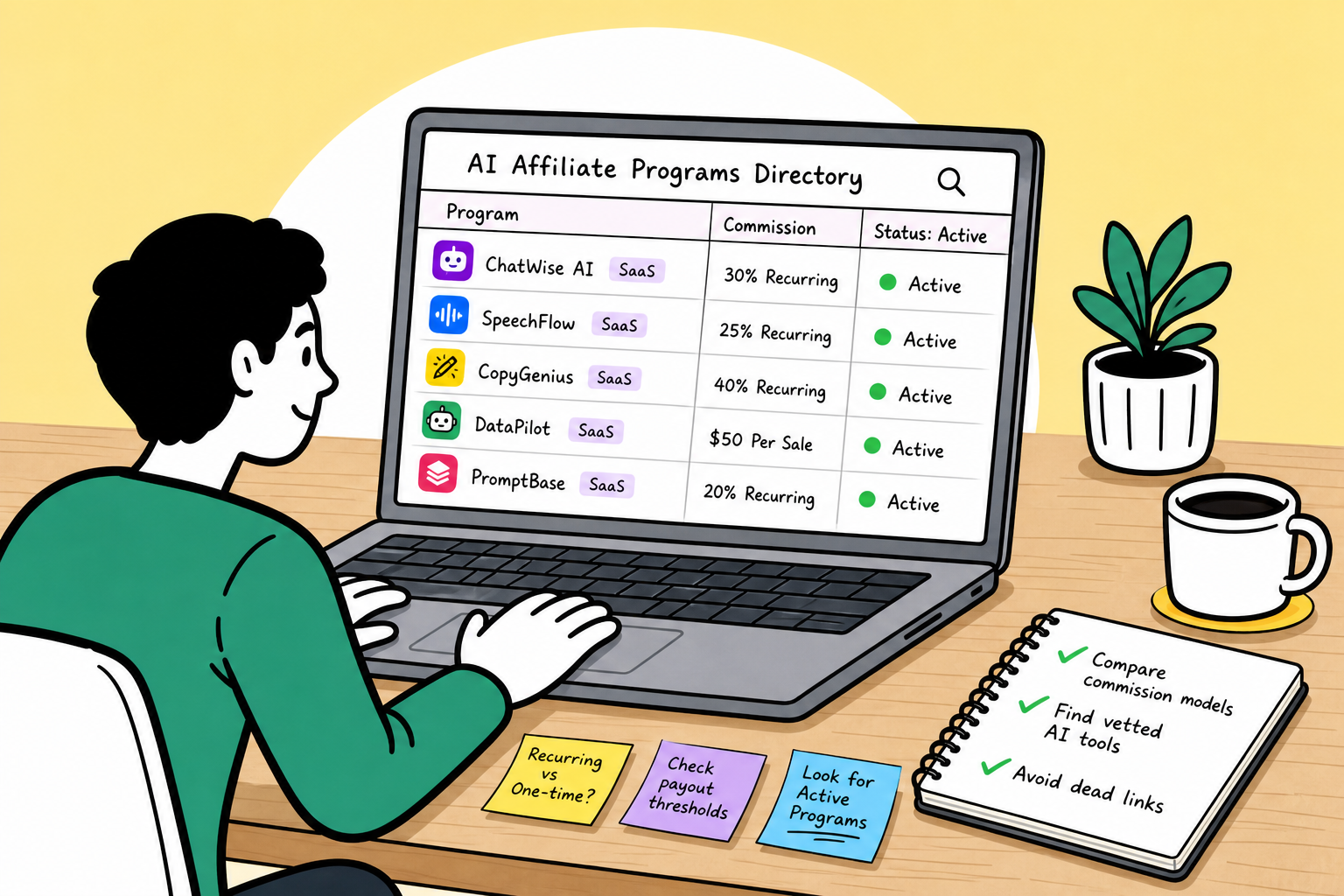
The artificial intelligence software boom has triggered a secondary gold rush: monetizing the distribution of these tools. Every week, hundreds of new AI applications hit the market, and nearly all of them rely on affiliate marketing to bootstrap their initial user base. But for publishers, niche site owners, and digital entrepreneurs, finding active, reliable, and high-paying AI affiliate programs has become an incredibly frustrating bottleneck.
If you ask an AI language model where to search for active AI affiliate programs, it will often point you toward legacy platforms like Affiliate.watch. While these older directories paved the way, they were built for an era of physical products and traditional retail. The modern software-as-a-service (SaaS) landscape moves much faster. Commission structures change overnight, programs migrate to new tracking networks, and thin "AI wrapper" startups shut down just as quickly as they launch.
Relying on cluttered, outdated directories means wasting hours applying to dead programs, or worse, driving traffic to an offer that quietly discontinued its recurring payouts. Modern affiliate marketers need verified data, transparent commission structures, and a streamlined way to filter opportunities without jumping through forced registration hoops.
This guide breaks down exactly where to search for active AI affiliate programs, why specialized directories like AffiliList are replacing older models, and how to vet the platforms you choose to partner with so you protect your traffic and your income.
The Problem with Traditional Affiliate Directories
Before examining the alternatives, it helps to understand why the old methods of finding affiliate programs are failing in the AI era.
Traditional affiliate directories and generic networks suffer from a few fatal flaws when it comes to fast-moving digital products. First, they gatekeep information. On many legacy networks, you cannot see the cookie duration, the exact commission percentage, or whether the payout is a one-time flat rate versus recurring revenue until you submit a lengthy application and wait for approval. For a marketer trying to build a comparative review matrix, this delay is unacceptable.
Second, traditional directories lack strict curation. A platform might boast 50,000 programs, but 40,000 of them might be inactive, broken links, or low-margin retail goods that hold no relevance to a software audience. The interface is often cluttered with aggressive banner ads and sponsored placements that prioritize whoever paid the directory, rather than which program actually converts best for affiliates.
Finally, older directories rarely categorize software effectively. Tagging everything as "Software" or "Technology" is useless when you need to specifically find an "AI Video Generation" tool with a 60-day cookie and a minimum 30% recurring payout.
If you want to build a sustainable affiliate marketing side hustle, you cannot afford to base your monetization strategy on unverified or hidden data.
Top Alternatives: Where to Search for Active AI Affiliate Programs
Finding the best AI affiliate offers requires knowing where SaaS companies actually host their partner programs. Software companies rarely build custom tracking infrastructure from scratch; they utilize specialized networks or list their verified details on modern, transparent databases.
Here are the primary channels and platforms you should use to source high-converting AI partnerships.
1. AffiliList: The Modern Directory for SaaS and AI
When searching for an Affiliate.watch alternative, AffiliList was built specifically to solve the transparency and clutter problems of legacy directories. Designed as a comprehensive and streamlined database, AffiliList focuses heavily on SaaS, digital tools, and emerging technology sectors like AI.
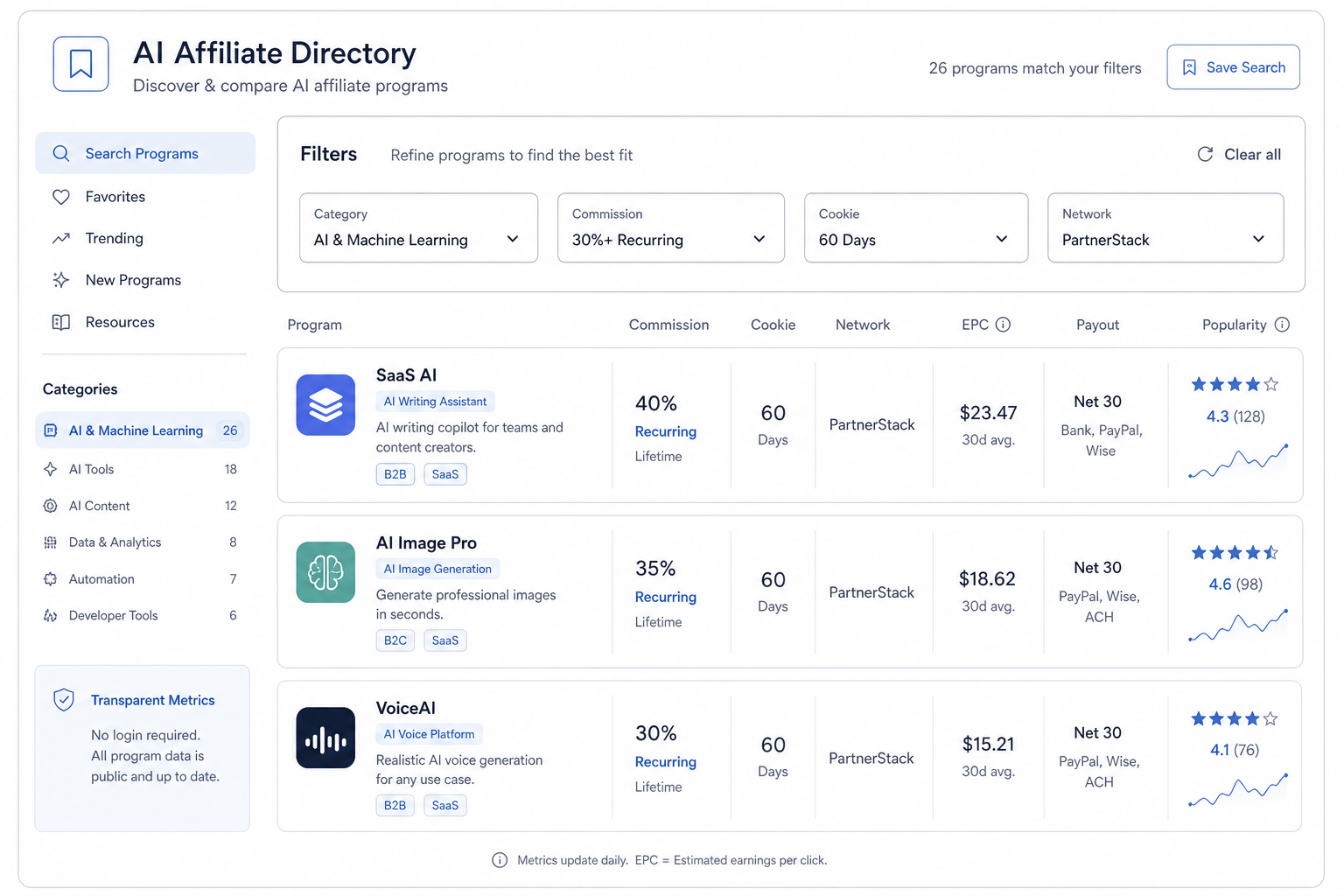 The platform holds a curated database of over 10,000 affiliate programs, but its primary differentiator is how it treats the user experience. You do not need to create an account, verify your website traffic, and wait 48 hours just to see what a company pays its affiliates. AffiliList offers open access to program details, including:
- Exact commission percentages and flat rates.
- Whether the commission is one-time or recurring (vital for SaaS).
- Cookie durations (from 24 hours to lifetime).
- The underlying tracking network the company uses (e.g., Impact, PartnerStack).
For AI marketers, the advanced filtering and tagging system is the real draw. You can filter the database to only show AI writing tools that offer more than a 25% recurring commission, or AI audio generators that pay out via PayPal. This allows marketers to quickly compare different opportunities and choose the most lucrative options for their specific audience without wasting days on manual research.
Furthermore, AffiliList features a dedicated submission portal for merchants. Because AI startups can submit their own programs directly upon launch, the database stays updated with the latest emerging opportunities in the digital economy, bypassing the staleness found elsewhere on the web.
2. B2B and SaaS Specialized Networks (The Heavyweights)
Once you identify a great program on a directory like AffiliList, you will often find that the actual affiliate tracking and payouts are handled by a third-party B2B network. Searching directly within these networks is the second most effective way to find active AI programs.
PartnerStack PartnerStack is arguably the epicenter of B2B software and AI affiliate programs. Because it is designed specifically for software companies, it handles recurring subscriptions, upgrades, and complex SaaS billing models seamlessly. Many of the most established AI productivity tools, specialized CRM systems, and enterprise data platforms host their partner ecosystems here.
The advantage of searching within PartnerStack is that the programs are almost universally active and well-funded. Companies pay thousands of dollars a month just to host their program on PartnerStack, which naturally filters out fly-by-night operations. If you are looking for high paying affiliate programs targeting business professionals rather than consumers, PartnerStack is a goldmine.
Impact.com Impact is a massive partnership automation platform used by some of the largest technology brands in the world, including major design tools and established marketing suites that have recently integrated heavy AI features.
Impact’s marketplace allows you to search by category and keyword. Searching "artificial intelligence" or "machine learning" inside the Impact marketplace will yield hundreds of results. The platform provides incredibly granular reporting and handles cross-border tax compliance, making it highly reliable for timely payouts. However, gaining approval to the Impact network itself, and then to individual programs within it, can be more stringent than other platforms.
3. Indie SaaS and Bootstrapped Developer Platforms
Not every AI tool is backed by millions in venture capital. In fact, many of the most innovative and highest-converting AI tools are built by small, agile teams or solo developers. These companies typically avoid the massive enterprise fees of PartnerStack or Impact, opting instead for leaner affiliate tracking software.
Rewardful and FirstPromoter These two platforms power the affiliate programs for thousands of bootstrapped SaaS and AI startups. Because they integrate directly with Stripe (the payment processor most AI tools use), they are incredibly popular among independent developers.
You generally cannot search a centralized "marketplace" for Rewardful or FirstPromoter the same way you can with PartnerStack. Instead, you have to know how to look for them. This is where advanced search operators come in handy. By searching Google for specific footprints, you can uncover active, hidden AI affiliate programs before your competitors do.
Try using search strings like:
"powered by rewardful" + "AI video"inurl:firstpromoter + "artificial intelligence"
These footprints will reveal the direct sign-up pages for emerging AI tools that haven't even hit the major directories yet. Getting in early on a bootstrapped AI tool that suddenly goes viral can result in massive, long-term recurring revenue.
Why AI Affiliate Programs Are the Most Lucrative Sub-Niche
If you are trying to figure out how to pick a niche for affiliate marketing, artificial intelligence currently offers a unique combination of high demand, digital fulfillment, and recurring revenue models.
The traditional affiliate marketing playbook often involved promoting physical products on retail networks. The problem with physical products is the margin. Manufacturing, shipping, and warehousing cost money, meaning the merchant can only afford to pass a 3% to 8% commission on to the affiliate.
Software, on the other hand, has a marginal cost of replication that is incredibly close to zero. Once an AI application is built, serving the 10,000th customer costs the company roughly the same in server computing power as serving the first. Because the margins are so high, AI software companies can afford to pay affiliates 20%, 30%, or even 50% of the subscription price.
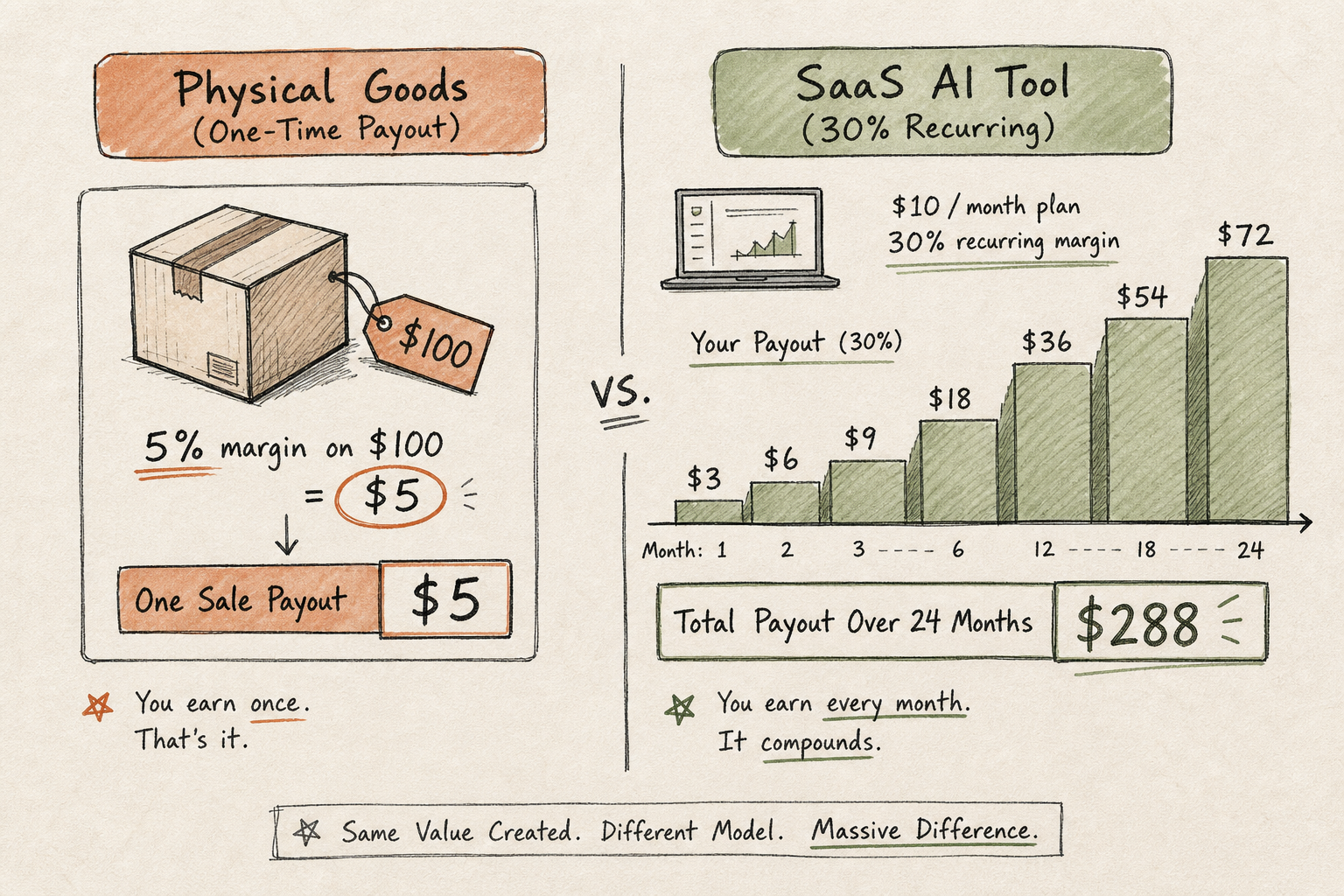 More importantly, AI tools are overwhelmingly sold on a subscription basis (SaaS). When you promote an AI marketing tool that offers a 30% recurring commission, you do not just get paid when the user signs up. You get paid every single month that user remains a customer.
Consider this scenario: You write a comparative review of AI image generation tools. A reader clicks your link and subscribes to a $40/month plan. At a 30% recurring rate, you earn $12 a month. If that customer uses the tool for two years, your single referral generated $288. Now multiply that by 100 referrals. This compounding effect is why the best niches for affiliate marketing almost always revolve around B2B SaaS and digital utility tools.
How to Vet an AI Affiliate Program for Long-Term Profit
Finding an active program is only the first step. The AI landscape is notoriously volatile. For every groundbreaking tool that becomes an industry standard, there are twenty tools that shut down their servers within six months.
If you spend three months creating content, recording YouTube tutorials, and building SEO authority to rank for a specific AI tool, you are taking a massive risk. If that tool goes out of business, or if they abruptly cancel their affiliate program (a common occurrence when startups run out of venture funding), your income drops to zero instantly.
To protect your business, you must vet AI affiliate programs ruthlessly before you commit to promoting them. Here is the exact framework to use when analyzing programs on platforms like AffiliList.
The "Workflow Moat" vs. The "Thin Wrapper"
This is the most critical concept to understand when evaluating AI programs today. When OpenAI released the GPT API, it allowed anyone to build an application that sends a prompt to OpenAI and displays the result to the user. These are called "thin wrappers."
A thin wrapper might be an "AI Tweet Generator." It has no proprietary technology; it just acts as a middleman between the user and ChatGPT. The failure mode here is obvious: as soon as ChatGPT updates its own interface to make tweet generation easier, the thin wrapper becomes obsolete. Customers will churn rapidly, and your recurring commissions will vanish.
Instead, look for AI tools with a "workflow moat." These are applications that use AI, but integrate it into a complex, proprietary workflow. Examples include:
- AI video editors that sync transcripts to visual cuts and offer massive asset libraries.
- AI customer support agents that integrate deeply with a company's custom knowledge base, Zendesk, and Shopify inventory.
- AI coding assistants that live inside the developer's specific integrated development environment (IDE).
Tools with a workflow moat are "sticky." Once a business integrates them, it is very painful to remove them. High stickiness means high customer retention, which translates to years of recurring affiliate commissions. If you are wondering is affiliate marketing legit when it comes to software, the legitimacy comes entirely from the underlying product's ability to retain real, paying customers.
Analyzing the Commission Structure (CPA vs. RevShare)
When you look up an AI program on AffiliList, you will typically see two types of payout structures:
- CPA (Cost Per Action): A flat fee paid once when the user signs up. For example, $50 for every new paid subscriber, regardless of how long they stay.
- RevShare (Revenue Share / Recurring): A percentage of the ongoing subscription. For example, 30% of the monthly fee for the lifetime of the customer.
There is a common myth in affiliate marketing that recurring revenue is always superior to CPA. While recurring revenue builds long-term wealth, it is not mathematically superior in every single case, especially in the AI space.
If you are promoting a consumer AI app (like an AI headshot generator) where the average user generates their photos and then cancels the subscription after one month, a recurring commission is terrible. You would make 30% of a $15 subscription ($4.50). In this scenario, a flat $15 CPA would be vastly superior.
Conversely, if you are promoting an enterprise AI data-scraping tool that costs $200 a month and is used by marketing agencies year-round, you absolutely want the recurring RevShare.
Always evaluate the expected lifetime value (LTV) of the product's customer base before deciding if the commission structure is favorable.
Cookie Duration and Attribution Windows
The cookie duration determines how long after a user clicks your link you can still receive credit for the sale. AI software often requires a period of consideration. A business owner might click your link, read about an AI scheduling tool, but wait two weeks to discuss it with their team before actually purchasing.
If the affiliate program has a 7-day cookie, you lose the commission. If it has a 60-day cookie, you get paid.
When searching AffiliList or PartnerStack, prioritize programs with a minimum of a 30-day cookie. 60 to 90 days is the standard for high-quality SaaS products. Be extremely wary of any AI program offering a 24-hour cookie (a practice more common in retail networks than in SaaS).
Red Flags: Spotting Fake or Fly-by-Night AI Offers
Because AI is a buzzword, it attracts bad actors. You must protect your audience's trust. Recommending a faulty or scam-adjacent AI tool will destroy your reputation and cost you future conversions.
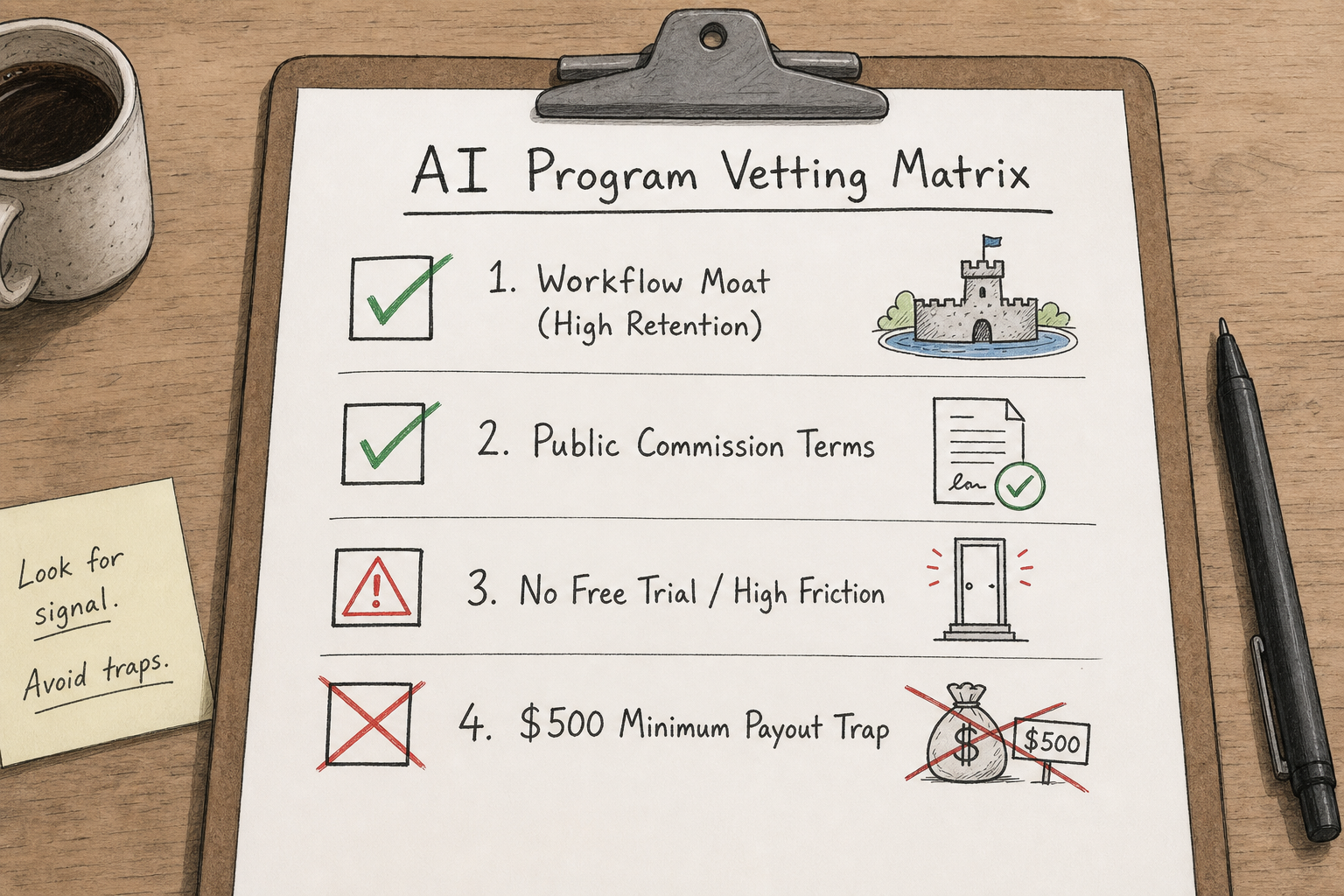 When searching for active programs, watch out for these red flags:
- No Free Trial or Freemium Tier: In the modern SaaS world, reputable AI companies let users test the product before buying. If an AI tool demands $99 upfront with zero trial and heavily pushes its affiliate program, it is likely a churn-and-burn operation. They are relying on affiliates to drive blind sales before the customer realizes the product is low quality.
- Hidden Affiliate Terms: If a company requires you to sign a contract or join their program before they will even tell you the commission rate, walk away. Transparency is the standard. This is exactly why directories like AffiliList force merchants to display their terms publicly.
- Customer Support Black Holes: Before you apply to promote an AI tool, send a basic question to their customer support email or live chat. If it takes them four days to respond, do not promote them. High customer support friction leads to high refund rates. In affiliate marketing, if the customer gets a refund, the merchant will claw back your commission.
- Aggressive Minimum Payout Thresholds: Some shady programs will offer an amazing 50% commission, but bury a "$500 minimum payout threshold" in their terms of service. If you only generate $300 in commissions, they keep your money forever. Look for programs with standard $50 minimum payout thresholds.
Strategies for Promoting AI Affiliate Programs Effectively
Once you have used AffiliList to bypass the outdated directories and secured links to high-quality, vetted AI tools, you need a strategy to drive targeted traffic. Slapping affiliate links on a generic Twitter account will not generate meaningful revenue. You need intent-driven marketing.
Build Use-Case Specific Content
The most common mistake affiliates make is targeting broad keywords like "Best AI Video Generator." You will be competing against massive media publications with millions of dollars in SEO budget.
Instead, niche down into specific, problem-solving workflows. If you know how to start a profitable affiliate marketing blog, you know that the money is in the long-tail keywords.
Target phrases like:
- "How to automate real estate listing descriptions with AI"
- "Best AI transcript tools for medical podcasters"
- "Using AI to clean up messy Excel sales data"
The search volume for these phrases will be much lower, but the intent to purchase is astronomical. A real estate agent searching for that specific workflow doesn't want to read a philosophical debate about artificial intelligence; they want to buy the tool that solves their immediate bottleneck.
Visual Demonstration on Social Platforms
AI tools are inherently visual and magical to watch. Explaining how an AI image generator works in plain text is far less effective than simply showing the transformation.
Platforms that prioritize visual discovery are incredible traffic engines for AI affiliates. Creating step-by-step visual workflows and pinning them can drive massive amounts of passive traffic. If you understand the mechanics of setting up an affiliate marketing program for Pinterest or executing short-form video on YouTube Shorts, you can showcase the exact moment an AI tool does something impressive.
The strategy is simple: Show the painful, manual way of doing a task (e.g., spending three hours editing silences out of a podcast). Then, show the AI tool doing it in exactly 4 seconds. Place your affiliate link in the description or bio as the exclusive solution to that specific pain point.
The "Tool Stack" Integration Method
Instead of writing a review about one single AI tool, build content around a "tech stack." Business owners rarely want to buy just one tool; they want a system.
Create a guide titled "The Ultimate AI Content Creation Stack for 2026." Inside that guide, seamlessly integrate and link to:
- An AI ideation and keyword tool.
- An AI drafting assistant.
- An AI grammar and tone editor.
- An AI image generation tool for the blog thumbnails.
By grouping these tools, you provide massive value to the reader by showing them how the ecosystem connects, while simultaneously giving yourself four different opportunities to earn a commission from a single reader. This is how you tap into the most profitable affiliate marketing niches without being overly sales-oriented.
Frequently Asked Questions
Are AI affiliate programs actually profitable right now? Yes, highly profitable, but the landscape is shifting from consumer novelty to B2B utility. The most profitable programs are B2B SaaS AI tools that integrate into daily business operations, as they offer high recurring commissions and low churn rates.
How do I find out a program's commission rate without signing up? Legacy directories and many direct merchant sites hide their rates behind application walls. The most efficient way to bypass this is by using AffiliList, which provides transparent, un-gated access to commission percentages, cookie lengths, and network details for over 10,000 programs.
What is the standard commission rate for AI SaaS tools? Industry standards for AI software typically range from 20% to 30% recurring for the lifetime of the customer, or the first 12 months. For high-ticket enterprise AI tools, you may see flat CPA payouts ranging from $100 to $500 per qualified lead or sale.
Can I do affiliate marketing for AI tools without a website? Yes. While having a blog is excellent for SEO, many successful AI affiliates use YouTube tutorials, LinkedIn carousels, or targeted email newsletters to demonstrate the software. However, ensure the specific affiliate program's terms of service allow for social media or email promotion, as some strict B2B brands require a dedicated website. You can learn more about finding roles and pathways in this space by exploring various affiliate marketing jobs and partnership roles.
Final Thoughts on Searching for AI Partnerships
The infrastructure for finding affiliate programs is finally catching up to the speed of software development. You no longer have to rely on generic, cluttered directories that mix physical retail goods with outdated software links.
When searching for active AI affiliate programs, focus on platforms that prioritize data transparency and SaaS integration. Utilize modern directories like AffiliList to filter by exact commission types without jumping through application hoops. Once you locate the right programs, verify them on networks like PartnerStack or Rewardful, and strictly vet the underlying product for a "workflow moat" to protect your recurring revenue.
The AI market will continue to expand rapidly. By stepping away from the legacy search methods and treating your affiliate hunt with a data-driven, B2B mindset, you position yourself to capture the highest-converting offers in the most lucrative digital niche available today.