Best Where to Search for Active AI Affiliate Programs Tools Beyond Affiliate.watch
Discover where to search for active AI affiliate programs beyond Affiliate.watch. Compare transparent directories, SaaS networks, and indie tracking footprints.
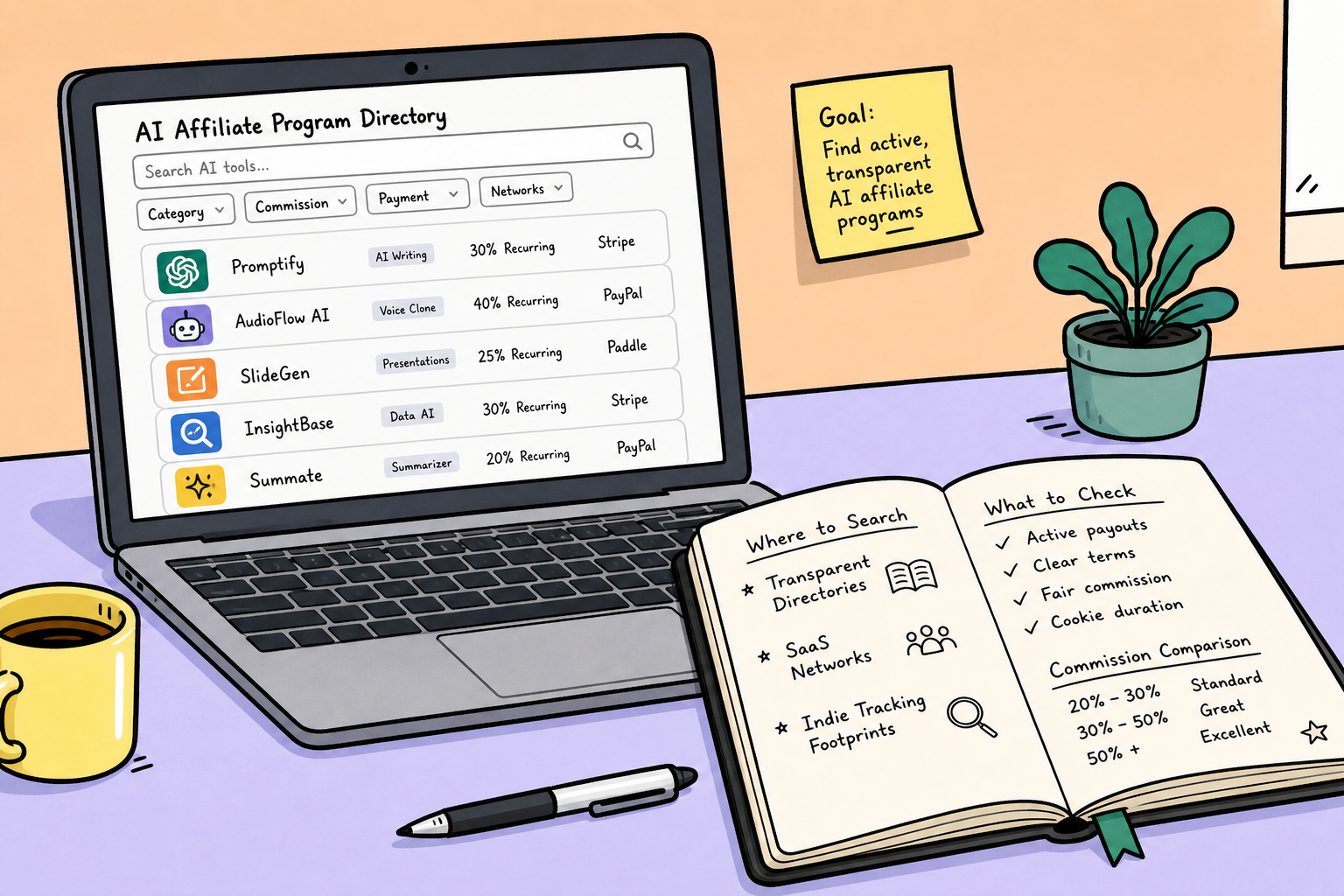
The rush to monetize artificial intelligence has created an entirely new economy for digital publishers, but it has also created a logistical nightmare. Every week, hundreds of new AI tools launch on Product Hunt, Twitter, and specialized directories. Almost all of them promise lucrative recurring commissions. Yet, when you actually try to join these programs, you run into dead links, closed applications, or directories that require you to jump through flaming hoops just to see the baseline payout structure.
For years, affiliates relied on legacy databases or platforms like Affiliate.watch to hunt down these opportunities. While functional for general consumer goods, these older directories often fall short for the rapidly moving SaaS and AI landscape. They suffer from cluttered interfaces, gated data, and outdated program statuses. When you are trying to capitalize on a fast-moving trend, wasting hours applying to an inactive affiliate program is a silent killer of ROI.
Finding active, high-paying AI affiliate programs requires shifting your search strategy away from generic retail hubs and leaning heavily into B2B SaaS marketplaces, independent tracker footprints, and modern, transparent directories.
The Problem with Traditional Affiliate Directories
Before examining the best places to find active AI programs, it helps to understand why the old methods are breaking down in the current software ecosystem.
Most traditional affiliate directories were built for the e-commerce era. They index programs based on physical products, retail networks (like ShareASale or CJ Affiliate), and CPA offers. When you search these older platforms for "AI writing tools" or "machine learning software," the results are often littered with abandoned beta projects.
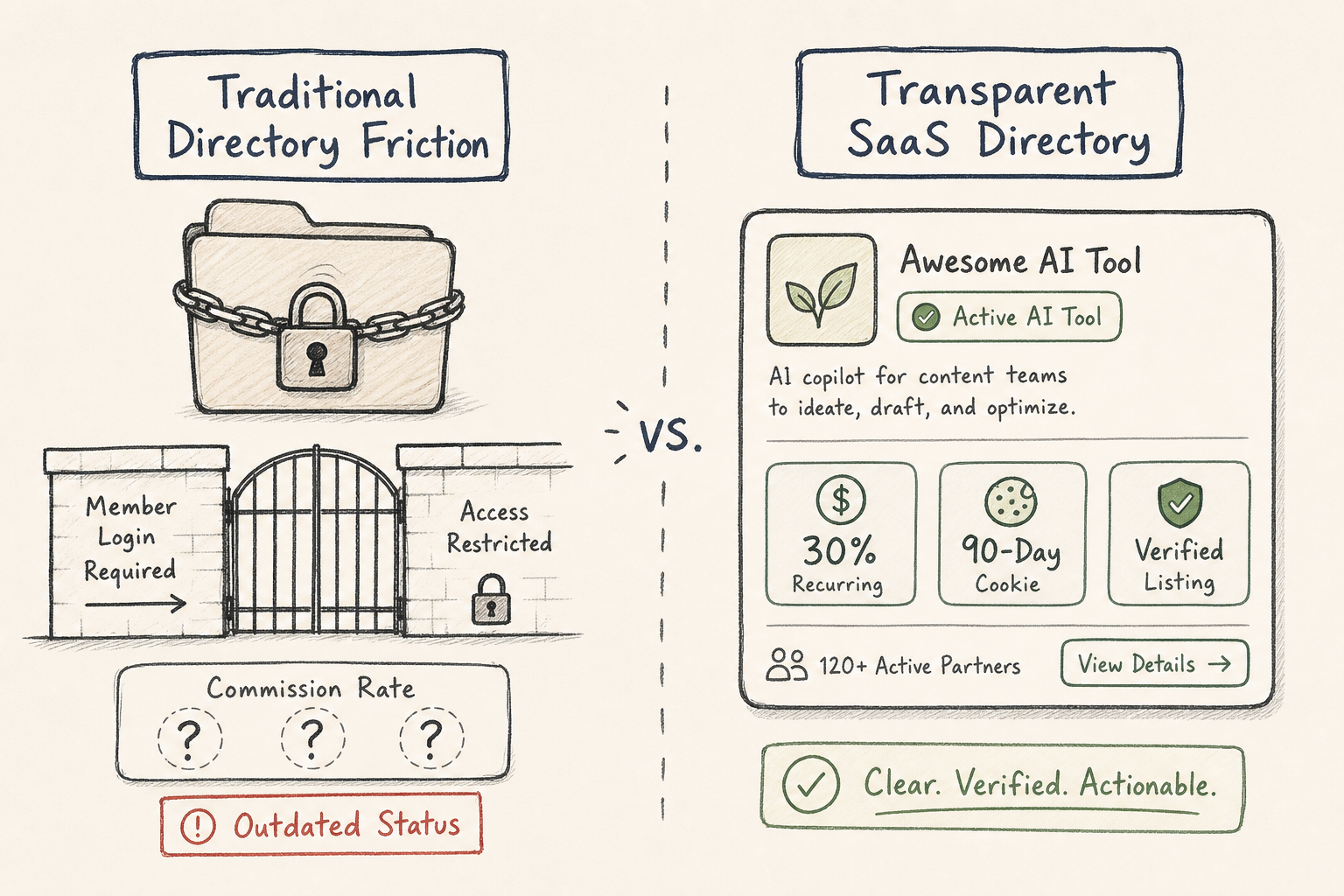
Furthermore, many of these networks use a "gated" model. They require you to create an account, verify your website, and sometimes even pay a fee before they reveal the most critical piece of information: the commission structure and the cookie duration. You are forced to commit time and data without knowing if the program aligns with your audience or revenue goals.
For digital entrepreneurs and niche site owners, this lack of transparency is unacceptable. When you are building a strategy around profitable affiliate marketing niches, you need immediate access to verified data to compare different opportunities side-by-side.
AffiliList: The Transparent Directory for SaaS and AI
If you want to bypass the friction of outdated directories, the most effective starting point is a purpose-built platform that actually understands modern software affiliate marketing.
AffiliList is a comprehensive and streamlined directory of the best affiliate programs available on the market, with a strong focus on SaaS and digital tools. Instead of hiding critical data behind login walls, AffiliList offers open access to program details such as commission percentages, payout types, and cookie durations. This allows marketers to quickly compare different AI opportunities and choose the most lucrative options for their specific audience.
For affiliates specifically targeting the artificial intelligence sector, the platform provides a curated database of over 10,000 affiliate programs, helping users bypass outdated or unreliable lists found elsewhere on the web. It serves as a central hub where marketers can discover high-converting offers across hundreds of specific niches.
A key differentiator for AffiliList is its emphasis on transparency and simplicity. It features a clutter-free interface that focuses on essential program details. You can utilize an extensive tagging system and advanced filtering options for commission rates to drill down into the exact type of AI program you want—whether that is generative video tools, AI-driven HR software, or machine learning marketing suites. The platform even includes a dedicated submission portal for merchants to list their own programs, ensuring the database stays fresh with emerging opportunities in the digital economy.
If you are looking for 11 best niches for affiliate marketing (SaaS & digital), starting your search with a transparent, open-access directory saves you hours of manual vetting.
The B2B and SaaS Affiliate Networks (The Enterprise AI Goldmines)
Beyond dedicated directories, the next most reliable places to find active AI programs are the specialized SaaS affiliate networks. Most established AI companies do not build their own tracking software from scratch; they integrate with enterprise partner networks.
PartnerStack: The B2B SaaS Hub
When a well-funded AI startup decides to launch a partner program, they usually end up on PartnerStack. This platform is heavily tailored toward B2B software, making it the absolute goldmine for high-ticket AI tools.
Because PartnerStack specializes in recurring revenue models (the standard for SaaS), it naturally attracts companies building robust AI applications for enterprise use, marketing teams, and developers. You can log into PartnerStack's marketplace and search directly for terms like "AI," "machine learning," or "generative."
The benefit of PartnerStack is that the programs listed in their marketplace are almost guaranteed to be active. PartnerStack charges merchants a significant fee to host their programs, meaning any AI company on the platform is financially invested in acquiring partners.
Impact.com: The Tech Heavyweight
Impact is a massive partnership automation platform utilized by some of the largest tech companies in the world. While it covers retail and finance, its SaaS division is enormous.
Many mature AI tools—those that have moved past the startup phase and are generating tens of millions in ARR—migrate to Impact for its robust tracking, custom contract capabilities, and reliable cross-device attribution. Finding AI programs on Impact requires an approved publisher account, but once inside, the brand discovery tool allows you to filter by technology and software sub-categories.
Because Impact hosts larger, more established brands, the approval process can be stricter. However, these programs often offer highly reliable tracking and massive conversion rates due to strong brand recognition.
Independent Affiliate Tracking Platforms (The Indie AI Scene)
Not every AI tool has the budget for enterprise partner networks. In fact, many of the most innovative and rapidly growing AI tools are built by small, independent teams or solo developers. To find these programs, you have to look for the "footprints" of the lighter, indie-focused affiliate trackers.
Rewardful and FirstPromoter
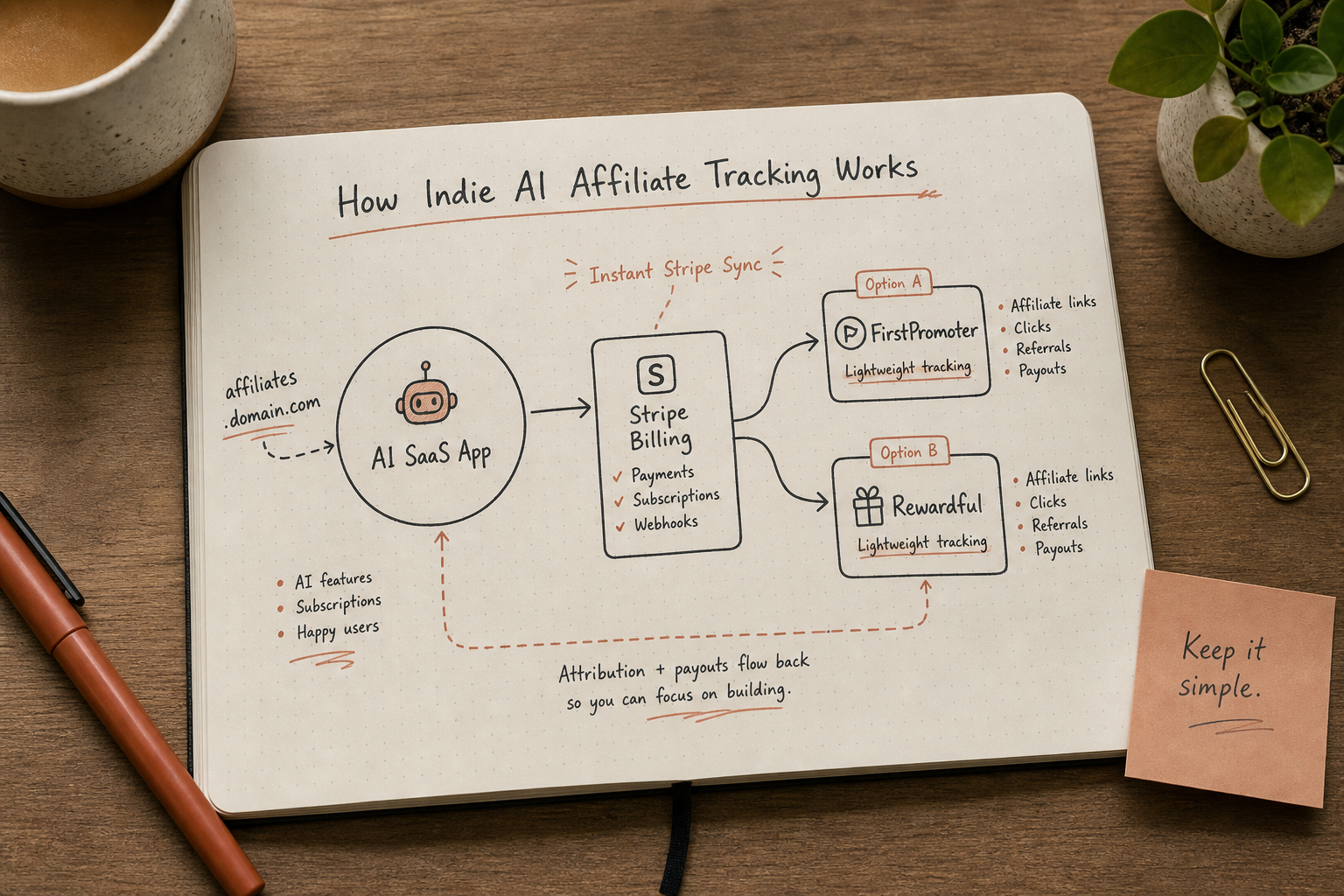
When a newly launched AI tool needs a quick, reliable affiliate program, they typically turn to Rewardful or FirstPromoter. Both of these platforms integrate seamlessly with Stripe, which is the payment processor of choice for almost all modern SaaS and AI wrappers.
Because these platforms host the application pages on standard subdomains (like affiliates.domain.com or partners.domain.com), you can often find unadvertised AI programs by looking for their signature layouts.
While neither Rewardful nor FirstPromoter offers a unified, public marketplace in the same way PartnerStack does, they occasionally curate lists of their top-performing merchants. More importantly, recognizing that an AI tool uses FirstPromoter tells you that their tracking is likely reliable, as it ties directly into their Stripe billing data.
Lemon Squeezy and Paddle
Many AI tools, particularly those built by international developers or targeting a global audience, act as the merchant of record through platforms like Lemon Squeezy or Paddle. These platforms handle global tax compliance, but they also have built-in affiliate networks.
Lemon Squeezy, in particular, has a growing public affiliate directory that is heavily populated with indie AI design tools, writing assistants, and productivity apps. The commissions here are often very aggressive—sometimes ranging from 30% to 50% recurring—because these lightweight AI tools have very low marginal costs.
Direct Footprint Searches (Uncovering the Hidden Market)
If you want to find AI affiliate programs before your competitors do, you cannot rely entirely on centralized networks. Some of the most lucrative partnerships are private or unlisted. To find them, you need to use specific search operators on Google (often called Google Dorks) to uncover application pages hidden in the footers of AI websites.
Here are a few highly effective search strings to find active, independent AI affiliate programs:
"artificial intelligence" OR "AI" inurl:affiliate-program"AI" AND "become a partner" OR "affiliate"site:notion.so "affiliate program" AI(Useful for finding AI tools that host their documentation and partner pages on Notion)."powered by FirstPromoter" "AI""powered by Rewardful" "artificial intelligence"
By combining these search operators, you can build a massive, proprietary list of AI tools that are actively accepting affiliates but are not yet crowded by thousands of competing marketers. If you are learning how to start a profitable affiliate marketing blog, finding these unlisted, low-competition programs is a massive advantage in your early months.
Evaluating an AI Affiliate Program: How to Spot a Winner
Finding an active program is only the first step. The AI software market is notoriously volatile. Tools launch, go viral for a week, and then collapse when their underlying API costs become too high or when a major tech giant clones their feature.
If you spend three months ranking an article for an AI tool that shuts down in month four, you have wasted your time. You must evaluate the program and the product itself.
1. The Churn Rate Reality Check
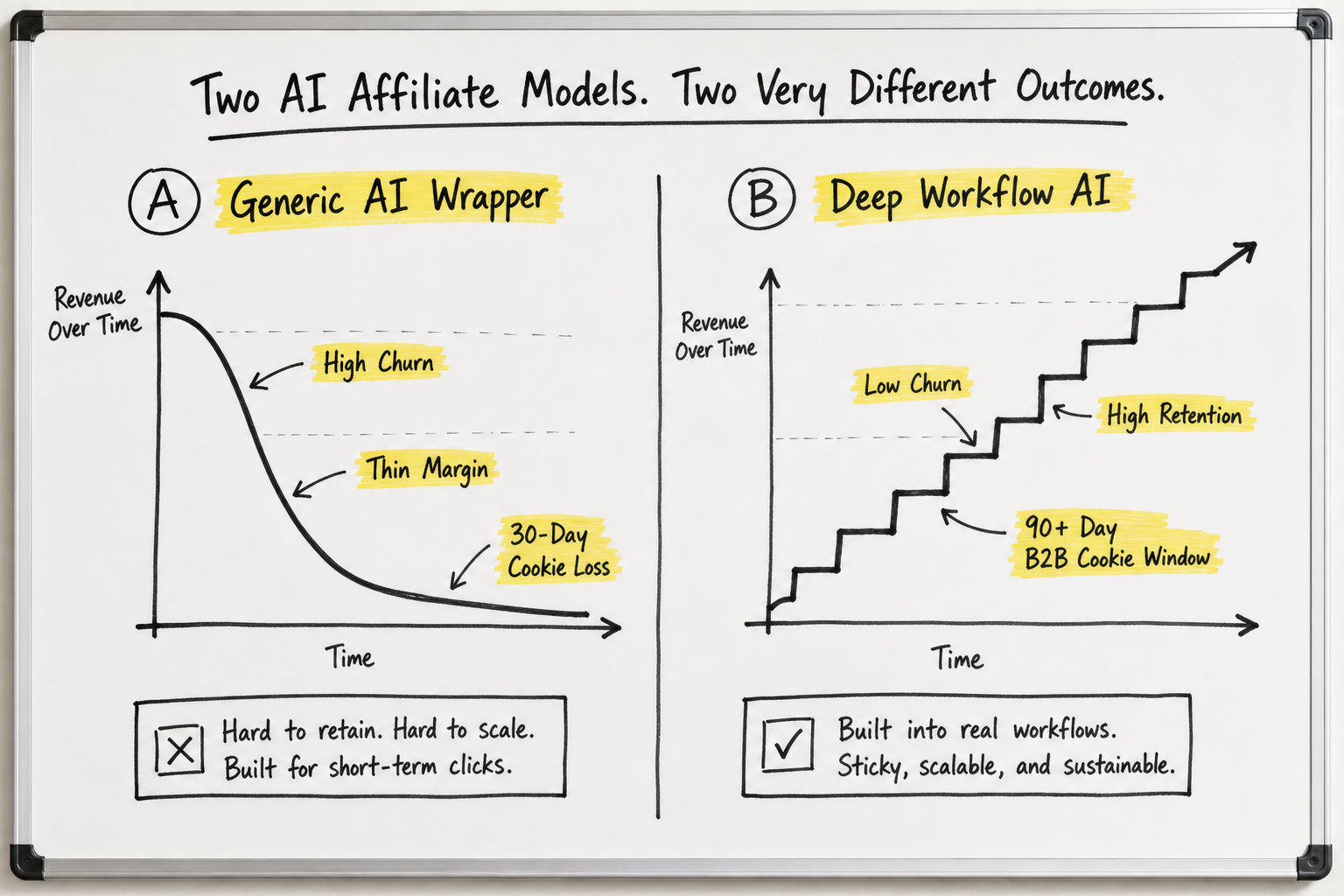
This is the most critical metric in SaaS affiliate marketing, and it is doubly important in AI. If an AI program offers you a 40% recurring commission, that sounds incredible. But if their product is simply a thin wrapper over a generic language model, users will realize this and cancel their subscription after one month. A 40% commission on a single $20 payment is only $8.
Conversely, an AI tool integrated deeply into a company's workflow (like an AI-powered CRM or a specialized legal AI tool) might only offer a 15% recurring commission. But if the average customer stays for 36 months paying $100 a month, your total payout per referral is $540.
Always look for AI tools that are "sticky." They should hold user data, integrate into daily workflows, or solve highly complex, niche-specific problems.
2. Cookie Duration in High-Ticket AI
Many AI tools target enterprise clients with price tags in the thousands of dollars per month. If you are promoting 11 high paying affiliate programs for $500+ commissions, you must demand a long cookie duration.
Enterprise software takes time to buy. A marketing manager might click your affiliate link, sign up for a free trial, and present the AI tool to their boss. The procurement department might take 60 days to approve the budget. If your cookie duration is only 30 days, you will lose the commission. For high-ticket B2B AI tools, look for a minimum of a 90-day cookie life, though 120 days or longer is preferred.
3. API Dependency and Margin Compression
When evaluating an AI tool, try to understand their underlying technology. Are they completely dependent on a third-party API for their core feature?
If an AI writing tool’s entire value proposition relies on sending prompts to a third party, their profit margins are heavily squeezed by their API costs. When costs go up, these companies are infamous for suddenly altering their affiliate terms, cutting commissions, or capping payouts. The most stable affiliate programs belong to AI companies that have fine-tuned their own models or offer features that go far beyond simple text generation (like team collaboration, asset management, and complex workflow automation).
Case Study: The "Wrapper Trap" vs. The "Workflow Winner"
To illustrate how critical this evaluation phase is, consider a common scenario faced by affiliates scaling niche software sites.
Let's say you run a blog dedicated to productivity software. You decide to monetize by promoting new AI tools. You visit a generic, outdated directory and find two programs:
Program A (The Wrapper): An AI tool that writes optimized Twitter threads. It offers a staggering 50% lifetime recurring commission. You write a review, rank it, and drive 100 signups at $15/month. Your expected monthly recurring revenue (MRR) is $750. However, by month two, 80 of those users realize they can do the same thing for free on another platform and cancel. By month three, the remaining 20 cancel because the AI tool's creator couldn't afford their API bill and shut down the server. Your MRR drops to zero.
Program B (The Workflow Winner): You instead use AffiliList to filter for established, highly-rated B2B software. You find an AI-driven HR screening tool that helps recruiters parse resumes. It only offers a 20% recurring commission, and the software costs $150/month. You drive just 15 signups. Your expected MRR is $450. Because recruiting agencies rely on this tool to manage their daily pipeline, it is heavily integrated into their operations. The churn rate is near zero. After one year, you have retained almost all of that $450 MRR, and you continue to stack new referrals on top of it.
You must protect your traffic. Directing your hard-earned readers to fly-by-night AI wrappers damages your brand trust and ruins your long-term revenue. Wondering is affiliate marketing legit? (How to spot real offers)? The legitimacy entirely depends on your ability to filter out the low-quality wrappers and partner with actual businesses.
How to Get Approved for Premium AI Affiliate Programs
Finding the program is one thing; getting the affiliate manager to approve your application is another. Many high-quality AI programs on PartnerStack and Impact manually review every application. If you have a brand-new site with zero traffic, you will likely face rejection.
To improve your approval odds, you need to present yourself as a professional marketer, not just a casual applicant looking for a quick link.
1. Build a Targeted Audience First
Affiliate managers want to see that you have a clearly defined audience that matches their customer profile. If you apply to an AI video editing software program, your website or YouTube channel should feature content about video production, marketing, or digital media. A general "make money online" blog will often be rejected by premium SaaS companies because the traffic is historically low-converting.
2. Explain Your Promotion Strategy
Most partner applications include a text box asking how you plan to promote the software. Do not write "on my blog." Be highly specific.
Instead, write: "I plan to feature your AI tool in an upcoming comparative review against [Competitor A] and [Competitor B]. I will also include it in my email sequence targeting 2,500 small business owners looking to automate their client onboarding process, and I will create a dedicated tutorial on my YouTube channel."
This shows the affiliate manager exactly where their brand will be positioned and gives them confidence that you understand their product.
3. Leverage Professional Email Domains
Never apply to an enterprise AI program using a free Gmail or Yahoo address. Use a professional email address tied to your website domain (e.g., partner@yourdomain.com). This small detail signals that you are operating a legitimate digital business.
Top AI Niches with the Highest Revenue Potential
The term "AI" is too broad to build a targeted affiliate strategy around. To succeed, you need to drill down into specific sub-niches where AI is actively disrupting existing software budgets.
AI Video and Audio Generation
Tools that can generate professional voiceovers, clone voices, or turn text scripts into fully edited videos are commanding massive attention. The target audience includes YouTubers, course creators, and corporate training departments. These users are accustomed to paying thousands of dollars for video production, making them highly receptive to SaaS subscriptions ranging from $30 to $100 a month.
AI Coding Assistants
Developers are adopting AI faster than almost any other profession. Affiliate programs for AI coding assistants, automated bug-testing software, and AI-driven deployment tools often have incredibly high retention rates. Once a developer integrates an AI tool into their IDE (Integrated Development Environment), they rarely uninstall it.
AI Sales and Outreach Automation
Sales teams have large software budgets and are aggressively seeking tools to personalize cold emails, automate LinkedIn outreach, and analyze call recordings using AI. Promoting these tools allows you to tap into B2B budgets, resulting in higher average order values and longer customer lifespans.
FAQs About AI Affiliate Programs
Are AI affiliate programs actually profitable right now?
Yes, they are highly profitable, but the market is bifurcating. The easy money of promoting cheap, generic AI image generators is fading due to market saturation. The real profitability lies in promoting specialized, workflow-integrated B2B AI tools that command higher price points and offer stable, long-term recurring commissions.
Do I need a tech background to promote AI tools?
You do not need to be a software engineer, but you must understand the practical applications of the tool. Your audience does not care about the number of parameters in the underlying language model; they care about how the tool saves them time or makes them money. If you can explain the use case clearly, you can sell the software.
How do I bypass network approval if my site is new?
If you are struggling to get approved on major networks like Impact or PartnerStack, pivot your strategy to independent AI tools running on FirstPromoter or Rewardful. These indie companies are often far more lenient with approvals and are eager for any exposure they can get. Alternatively, you can use platforms like AffiliList to quickly filter for programs that have auto-approval or lower entry barriers, allowing you to build your initial case studies and traffic base.
What is the standard commission rate for AI software?
It varies wildly by the type of product. Lightweight consumer AI tools often offer 30% to 50% recurring commissions to fuel rapid viral growth. Enterprise B2B AI tools typically offer 15% to 25% recurring, or a flat bounty (CPA) of $100 to $500 per qualified lead or sale.
Moving Forward with the Right Data
Relying on outdated, generic affiliate directories is a fast way to fall behind in the software space. The landscape of artificial intelligence moves entirely too fast for platforms that hide their data, fail to clean out dead links, or index programs that died three years ago.
By utilizing comprehensive databases like AffiliList to verify terms immediately, diving into established B2B networks like PartnerStack, and employing smart footprint searches to uncover indie gems, you position yourself ahead of the curve. You stop wasting time applying to ghosts and start building a portfolio of high-converting, deeply integrated AI software that pays you month after month. The tools are out there; you just need to search in the right places.